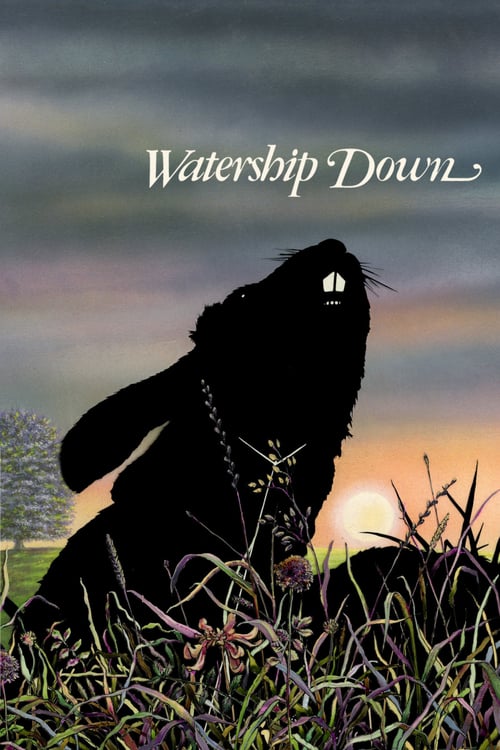
Watership Down
Plot
When the warren belonging to a community of rabbits is threatened, a brave group led by Fiver, Bigwig, Blackberry and Hazel leave their homeland in a search of a safe new haven.
Get the Weekly Woke Watchlist
New and trending movies scored for woke bias, preachy messaging, and forced political themes — before you waste your evening.
No spam. One useful email per week.
Overall Series Review
Categorical Breakdown
The narrative operates on universal themes of freedom versus tyranny, leadership, and survival. Characters are judged solely on merit, courage, and their ability to contribute to the group’s goal, not on immutable characteristics or any allegorical 'race' or 'privilege' within the rabbit world. The protagonists are mostly from a lower social class (rabbits who are not part of the Owsla elite) who rise to prominence purely through their actions.
The protagonists leave their original warren because it faces literal destruction from human developers and the Chief Rabbit dismisses the warning. They seek to establish a new, virtuous home based on their ancient cultural traditions and natural instincts, demonstrating respect for the idea of a healthy, functioning institution. The warrens they encounter are critiqued as either materialistic and doomed or totalitarian, but this is a critique of corrupt leadership structures, not an indictment of their core 'civilization' or heritage.
The core quest is driven by male camaraderie and leadership, with female rabbits only becoming a central objective late in the story to ensure the continuation of the species. This focuses heavily on a complementary, pro-natalist view where male protective strength (Bigwig, Hazel) is essential for the survival and establishment of a family unit, which is the direct opposite of a 'Girl Boss' or anti-natalist message.
The narrative features no references to centering alternative sexualities, gender ideology, or deconstructing the nuclear family. The primary drive for retrieving the female rabbits is the fundamental, biological imperative to perpetuate the warren's existence, centering the traditional male-female pairing as the normative structure for societal continuation.
The film explicitly features a strong, non-secular spiritual structure with the creator god Frith and the legendary hero El-ahrairah. The mythology is a source of cultural identity and moral parables for the rabbits, with characters frequently using spiritual references in daily speech. There is no hostility toward this faith; rather, it provides a transcendent context for their suffering and struggle.
Get the Weekly Woke Watchlist
New and trending movies scored for woke bias, preachy messaging, and forced political themes — before you waste your evening.
No spam. One useful email per week.