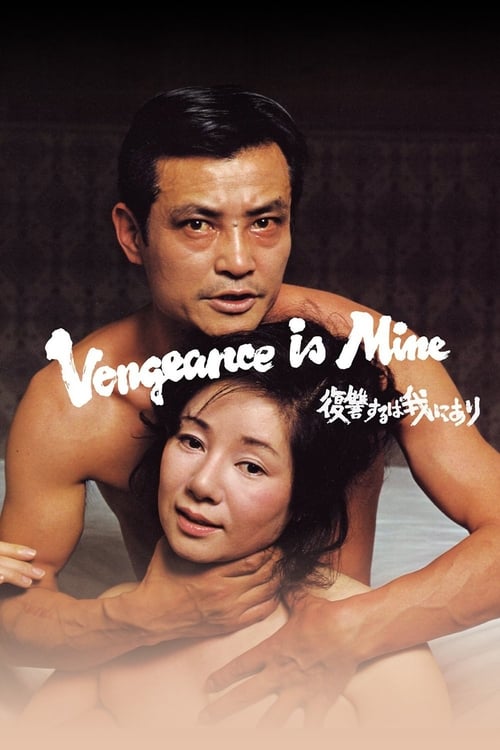
Vengeance Is Mine
Plot
A thief, a murderer, and a charming lady-killer, Iwao Enokizu is on the run from the police.
Get the Weekly Woke Watchlist
New and trending movies scored for woke bias, preachy messaging, and forced political themes — before you waste your evening.
No spam. One useful email per week.
Overall Series Review
Categorical Breakdown
The narrative is centered entirely within a non-Western context (Japan) and contains no elements of race-swapping or 'whiteness' vilification. Character conflict stems from individual psychopathy and family trauma, not from intersectional hierarchy or immutable characteristics. The focus is on the moral and psychological content of a killer's soul and the surrounding corrupt society.
The movie is a focused critique of a 'moral crisis' and 'moral squalor' in modern Japan following World War II. It explicitly depicts the degradation of traditional family structures and a rejection of the authority mainstays of Japanese society: the Emperor, the father, and religion. The film portrays the home culture as fundamentally corrupt and a 'rat pit' of opportunism.
Women are portrayed as complex, non-idealized figures, including a prostitute/innkeeper and a convicted murderer. The male lead is a violent killer who beats his wife. His wife is sexually drawn to her father-in-law and is encouraged into adultery by him. There are no 'Girl Boss' or 'Mary Sue' tropes; the women are victims and outcasts whose vitality is depicted in raw, often sexualized and tragic ways that do not align with modern ideological anti-natalism.
The core of the film’s sexual dynamics revolves around heterosexual deviance, marital strife, and sexual appetite within a traditional male-female pairing structure. There is no presence of queer theory, centering of alternative sexualities, or discussion of gender ideology. The focus is entirely on a dark, normative structure.
The main character, Iwao Enokizu, actively and scornfully rebels against his Catholic father's faith and rejects religion outright, laughing when told he is excommunicated. The only overtly religious character, the devout Catholic father, is shown to be a deep hypocrite who engages in a sexual act with his daughter-in-law and encourages her to sleep with other men, framing the traditional religion as a source of corruption and moral compromise.
Get the Weekly Woke Watchlist
New and trending movies scored for woke bias, preachy messaging, and forced political themes — before you waste your evening.
No spam. One useful email per week.