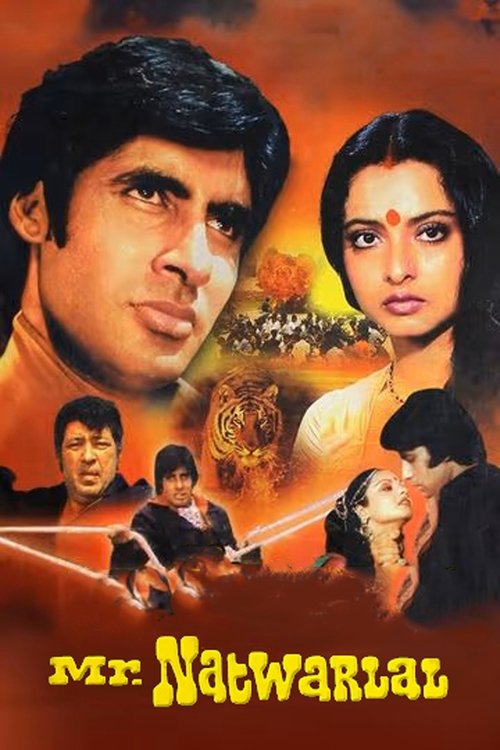
Mr. Natwarlal
Plot
When a police officer is framed for bribery by a criminal, his younger brother creates a secret identity for himself and poses as underworld figure Mr Natwarlal, determined to slowly but surely get revenge on his brother's behalf.
Get the Weekly Woke Watchlist
New and trending movies scored for woke bias, preachy messaging, and forced political themes — before you waste your evening.
No spam. One useful email per week.
Overall Series Review
Categorical Breakdown
The plot centers entirely on the personal honor and merit of the characters; the conflict is between an honest police officer and a corrupt criminal. The hero's motivation is universal: brotherly love and a desire for justice, which supersedes any consideration of immutable characteristics or an intersectional hierarchy. The focus is on a moral, character-based conflict.
The central action is the defense and restoration of the hero's family unit and his brother's honor within his own society. The hero's goal is to correct a systemic wrong (corruption) by punishing an evil individual, not to tear down the home culture or nation itself. The narrative endorses the virtue of the honest police officer, framing institutions as capable of good, which constitutes a strong defense of the civilizational structure.
The female lead is portrayed as a 'simple, village woman,' and the male protagonist is a strong, competent hero who undertakes a perilous mission. The brother's wife is depicted as a traditional, loving 'bhabhi maa' (sister-in-law/mother figure), celebrating motherhood and the traditional family. There are no 'Girl Boss' tropes, male emasculation, or anti-natalist messages present; the gender dynamics are complementary.
The film features a standard, traditional male-female romantic relationship and centers the nuclear/extended family (brothers, sister-in-law). As a 1979 Bollywood film, it adheres to the normative structure of the time, with no presence of a queer theory lens, alternative sexual ideologies, or challenges to biological reality. Sexuality remains a private matter within the context of the heterosexual romance.
The narrative is a classic morality tale of good (the honest brother and the avenging hero) versus evil (the corrupt villain). The hero is driven by a transcendent moral law of justice and family honor. The core message is aligned with Objective Truth—that framing an innocent man is wrong—and the film does not exhibit any hostility toward traditional religion or endorse subjective moral relativism.
Get the Weekly Woke Watchlist
New and trending movies scored for woke bias, preachy messaging, and forced political themes — before you waste your evening.
No spam. One useful email per week.