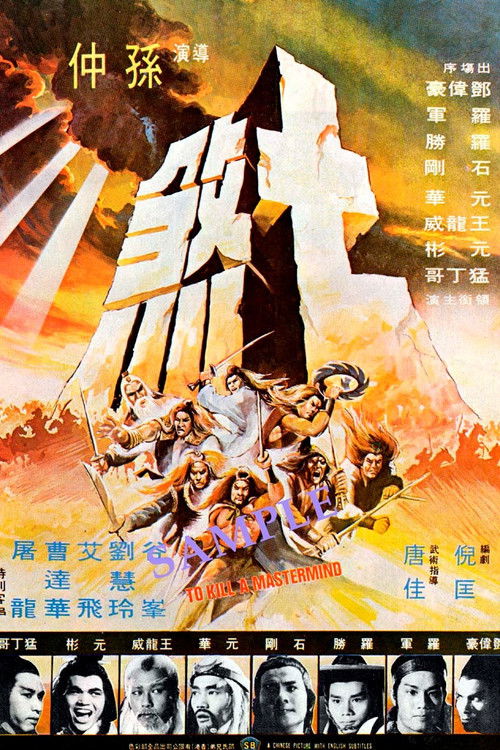
To Kill A Mastermind
Plot
A powerful crime syndicate known as the Chi Sha clan is a vast network of deadly criminals proficient in martial arts. Growing in number at an alarming rate, the Imperial Court orders Yang Chen-yu and his followers to wipe them out at all costs. Doing this proves difficult as no one knows the identity of the mastermind behind the Chi Sha, not even its own members. Spies infiltrate the organization in an effort to destroy them from within. But then, no one knows who the spies are and after a few ambushes and security breaches, the clan deputies begin suspecting one another of being traitors. With the Chi Sha dwindling in numbers, it's a matter of time before the mastermind must reveal himself.
Get the Weekly Woke Watchlist
New and trending movies scored for woke bias, preachy messaging, and forced political themes — before you waste your evening.
No spam. One useful email per week.
Overall Series Review
Categorical Breakdown
The conflict is based entirely on moral alignment and martial skill, pitting a righteous Imperial Court against a powerful crime syndicate. Characters are judged by their loyalty or treachery, with no narrative attention given to race, privilege, or intersectional hierarchy. The casting is historically and culturally authentic to the Chinese setting, with no forced diversity or 'race-swapping' present.
The Imperial Court and its military arm are the protagonists, actively working to suppress a chaotic and evil criminal element to restore peace and order to the 'martial world.' The narrative endorses and champions core civilizational institutions and the concept of justice against an existential threat, which is the opposite of civilizational self-hatred.
The film features a predominantly male-centric cast, characteristic of the action-heavy wuxia genre of the era. The plot is driven by male characters in positions of authority, as leaders of the syndicate, spies, and military commanders. The single notable female character occupies a very minor, secondary role. There is no 'Girl Boss' trope, no commentary on career fulfillment over family, and the narrative is noted for its complete lack of romance or sentimentality.
As a 1979 martial arts thriller, the film contains no sexual ideology or exploration of alternative sexualities. The focus is exclusively on espionage, martial arts combat, and the disintegration of a criminal empire. The narrative adheres strictly to a normative structure by omission, with no content dedicated to deconstructing gender or family.
The moral framework is objective, with the Imperial Court's mission to eliminate evil being the unquestioned 'good.' The conflict is secular, focused on crime and governance within the martial world. There is no religious commentary, no vilification of faith, and no theme of moral relativism to suggest a spiritual vacuum or hostility towards traditional religion.
Get the Weekly Woke Watchlist
New and trending movies scored for woke bias, preachy messaging, and forced political themes — before you waste your evening.
No spam. One useful email per week.