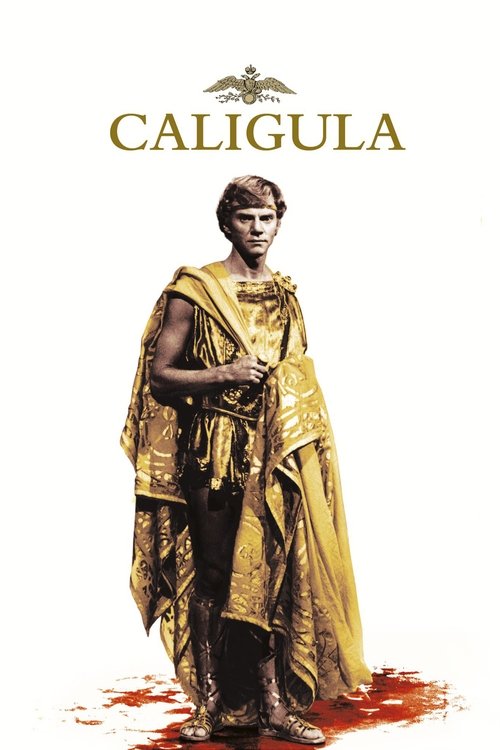
Caligula
Plot
After the death of the paranoid emperor Tiberius, Caligula, his heir, seizes power and plunges the empire into a bloody spiral of madness and depravity.
Get the Weekly Woke Watchlist
New and trending movies scored for woke bias, preachy messaging, and forced political themes — before you waste your evening.
No spam. One useful email per week.
Overall Series Review
Categorical Breakdown
The story focuses on the Roman ruling class and its internal political struggles, which do not involve race or intersectional hierarchy. The main cast is historically authentic to Roman high society in terms of race. Character actions are judged on the basis of power and depravity, not immutable characteristics.
The film functions as an explicit and intense critique of the 'home culture' of the Roman Empire, depicting its institutions—the Senate, the military, the traditional family—as fundamentally corrupt, decadent, and ripe for destruction. Caligula's reign is a sustained and violent deconstruction of Roman heritage and social foundations.
Gender roles are completely perverted by the atmosphere of extreme sexual exploitation and violence. Women are predominantly portrayed as either victims of Caligula's sadism (like the senators' wives forced into prostitution) or active participants in the decadence. Men are shown as either toxic, tyrannical monsters or bumbling, weak supplicants to the emperor's will.
Alternative sexualities and gender-nonconformity are centered extensively throughout the entire plot, not for political commentary, but as a spectacle of imperial decadence. The constant depiction of orgies, incest, and both heterosexual and homosexual acts is explicitly woven into the story's core, entirely deconstructing the concept of the normative family structure.
Caligula actively destroys and mocks the traditional foundations of the Roman state religion by proclaiming himself a god and desecrating sacred rites. The narrative establishes a universe where a single man's subjective, insane will is the only moral law, aligning perfectly with morality being subjective 'power dynamics' and showing hostility toward any transcendent or traditional spiritual law.
Get the Weekly Woke Watchlist
New and trending movies scored for woke bias, preachy messaging, and forced political themes — before you waste your evening.
No spam. One useful email per week.