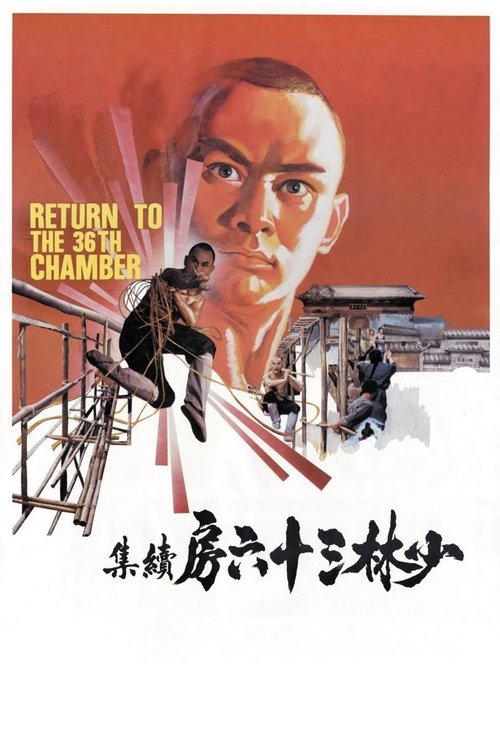
Return to the 36th Chamber
Plot
The workers of a dye factory have their pay cut by 20% when the factory owner brings in some Manchu thugs to try and increase production. Desperate to reclaim their full wages, the workers hire an actor to impersonate a priest and kung-fu expert from the temple of Shaolin. The factory owner proves the actor a fraud, and punishes all those involved. The young actor feels he has let the workers down, and promises to atone. He sets out for Shaolin, determined to be accepted as a kung-fu pupil at the elite temple.
Get the Weekly Woke Watchlist
New and trending movies scored for woke bias, preachy messaging, and forced political themes — before you waste your evening.
No spam. One useful email per week.
Overall Series Review
Categorical Breakdown
The core conflict pits Han Chinese workers against oppressive Manchu overseers and their Manchu-associated boss, framing the struggle through a specific historical/ethnic power dynamic. The plot centers on a resistance narrative against an ethnic minority ruling class, which is a form of identity conflict, but it does not contain the modern vilification of 'whiteness' or forced insertion of diversity. The hero’s final victory depends entirely on his personal discipline and acquired martial skill, embodying universal meritocracy.
The film demonstrates deep respect for the Han Chinese martial and spiritual heritage, using the Shaolin Temple as the ultimate source of knowledge, moral authority, and the means to defeat corruption. The hero seeks out this cultural institution to atone and gain the tools for justice, portraying it as a shield against chaos and oppression. The narrative champions the home culture against foreign-backed exploiters.
The movie's plot is a male-centric narrative following the protagonist’s journey of atonement and self-mastery within the entirely male monastic world of Shaolin. The central conflict of labor dispute and martial training contains no elements of the 'Girl Boss' trope, the emasculation of male characters, or anti-natalism messaging. Masculinity is presented through the protective role of the hero fighting for the exploited workers.
The story is a martial arts comedy from 1980 that focuses on physical training, labor disputes, and historical ethnic conflict. There is no presence of alternative sexual ideology, centering of non-traditional sexual identities, or deconstruction of the nuclear family unit. The gender and sexual structure is entirely normative and traditional for the genre and setting.
The Buddhist Shaolin Temple is the moral and physical center of the film, and the hero's transformative journey is explicitly a pursuit of spiritual and martial discipline taught by the monks. Faith and transcendent morality are portrayed as the necessary sources of strength and moral clarity required to fight injustice. Traditional spiritual practice is celebrated as a solution to worldly corruption.
Get the Weekly Woke Watchlist
New and trending movies scored for woke bias, preachy messaging, and forced political themes — before you waste your evening.
No spam. One useful email per week.