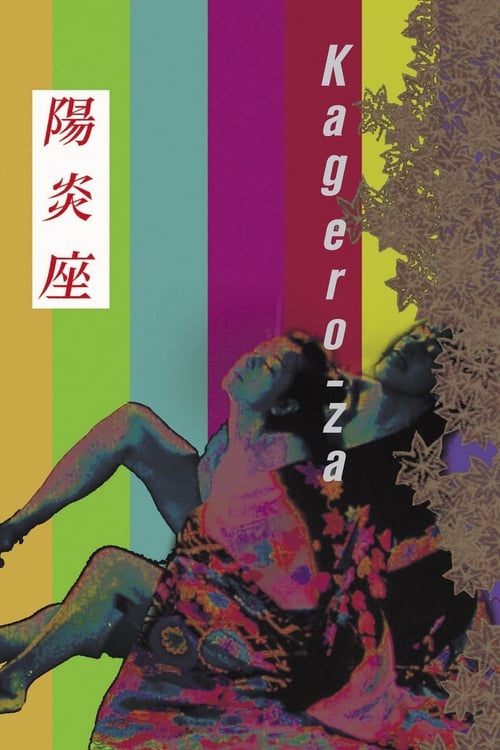
Kagero-za
Plot
A 1920s playwright meets a beautiful woman who may be the ghost of his patron's deceased wife.
Get the Weekly Woke Watchlist
New and trending movies scored for woke bias, preachy messaging, and forced political themes — before you waste your evening.
No spam. One useful email per week.
Overall Series Review
Categorical Breakdown
The narrative uses immutable characteristics for the purpose of depicting power and systemic oppression. The wealthy Japanese male patron forces his German-born wife to dye her blonde hair black and adopt a Japanese name to conceal her ethnic identity and conform to his cultural desires. This is a clear plot point where a character’s race and background are treated as a source of oppression by the elite establishment, which she then resents.
The setting is the Taishō era in Japan, and the film focuses on a 'surreal depiction of cultural corruption' within this time period. The central conflict is driven by the decadent, manipulative, and controlling behavior of the male patron, a representative of the old money and establishment. The film frames this home culture’s elite as fundamentally corrupted by hedonism and power, leading to a breakdown of moral order and destructive relationships.
Both female leads are defined by their oppression within the traditional marriage system and their desire for revenge against the male patron. One woman explicitly voices her 'resentment at being forced to become a second wife' and uses the affair to strike back. While they are not portrayed as flawless 'Girl Boss' types, the women’s actions are motivated by a clear critique of patriarchal control and the desire to escape the confinement of their assigned roles.
The main focus is on infidelity and a destructive love triangle within a traditional structure. The male patron does have an eccentric character trait where he enjoys dressing up as a geisha and dancing. This inclusion of a cross-dressing character is a notable deviation from the normative structure, but it is presented as a personal eccentricity and not the centering of a modern queer theory lecture or political agenda.
The film does not contain direct hostility toward an organized religion like Christianity. However, the plot deals extensively with the supernatural, ghosts, and characters discussing the selling of 'women’s souls,' creating a foundation of moral chaos. The story is an existential drama about shifting realities and illusion, which questions objective truth and higher moral law in favor of a personal, subjective nihilism.
Get the Weekly Woke Watchlist
New and trending movies scored for woke bias, preachy messaging, and forced political themes — before you waste your evening.
No spam. One useful email per week.