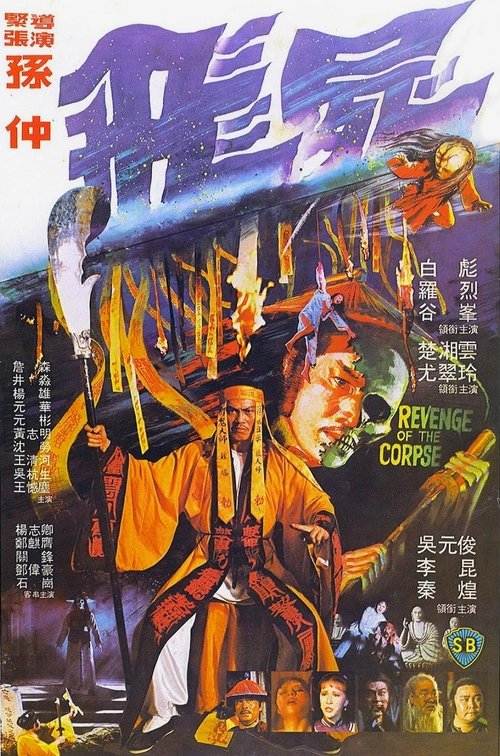
Revenge of the Corpse
Plot
A story of a coffin maker who tells a story about a policeman who was murdered by his wife and her lover. Eventually released constable loose of some grave robbers, the constables ghost is out to make the lives of all those involved in his death miserable. (A Shaw Brothers production)
Get the Weekly Woke Watchlist
New and trending movies scored for woke bias, preachy messaging, and forced political themes — before you waste your evening.
No spam. One useful email per week.
Overall Series Review
Categorical Breakdown
The casting is historically authentic for the setting, a Chinese-language film from Hong Kong. The conflict is based entirely on personal betrayal, corruption, and good versus evil, specifically an honorable constable against a wealthy underworld leader and bribed officials. Characters are judged solely on their merit, righteousness, or depravity. There is no focus on race or intersectional characteristics.
The film utilizes and celebrates traditional Chinese horror and supernatural aesthetics, including a vengeful ghost and an Exorcist Master. While the narrative critiques corruption within the local governing structure (police and officials), it simultaneously elevates the moral standard of the righteous constable who is ultimately martyred. The critique is internal to the society's morality, not a wholesale condemnation of the culture or its ancestors in favor of an outside culture.
The primary female character, the constable's wife, is depicted as an antagonist who is cold-hearted, promiscuous, and poisons her husband for her lover. She is not a 'Girl Boss' figure; she represents the source of betrayal and domestic evil, which is the catalyst for the tragedy. Masculinity is split between the honorable, righteous, but doomed husband and the evil, corrupt male lover, reflecting a complementarian focus on protective virtue versus destructive vice.
The core relational conflict is adultery within a traditional heterosexual marriage, a betrayal that is framed as an act of moral evil. The narrative structure adheres to a normative male-female pairing. There are no elements of alternative sexualities, gender ideology, or deconstruction of the nuclear family beyond the wife's direct act of betrayal and murder.
The entire plot relies on a belief in the spiritual realm and transcendent justice, as the hero returns from the dead as a ghost to exact revenge on the wicked. The film's climax features a traditional Exorcist Master who uses spiritual power against the vengeful spirit. This full embrace of the supernatural and the concept of a moral afterlife acknowledges an objective, higher moral law.
Get the Weekly Woke Watchlist
New and trending movies scored for woke bias, preachy messaging, and forced political themes — before you waste your evening.
No spam. One useful email per week.