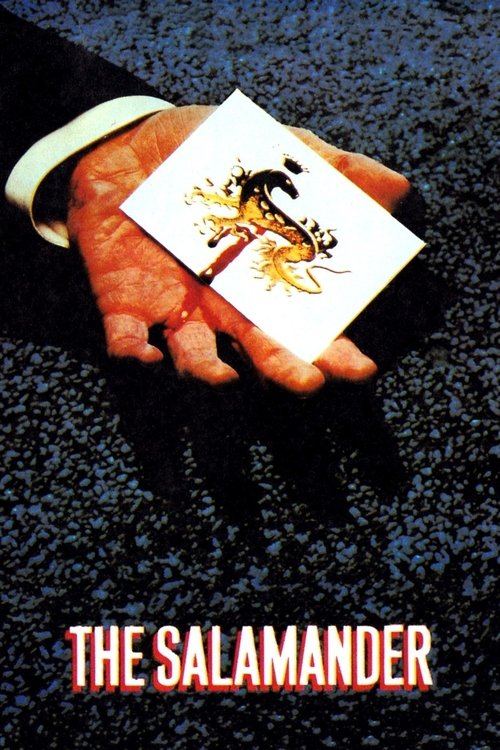
The Salamander
Plot
An Italian policeman investigates a series of murders involving people in prominent positions. Left behind at each murder scene is a drawing of a salamander. The policeman begins to suspect these murders are linked to a plot to seize control of the government.
Get the Weekly Woke Watchlist
New and trending movies scored for woke bias, preachy messaging, and forced political themes — before you waste your evening.
No spam. One useful email per week.
Overall Series Review
Categorical Breakdown
The conflict focuses on merit and corruption within the Italian political-military structure, not immutable characteristics or race. The protagonist, an Italian Colonel, is the moral hero. His key ally is a Black American Major, Cleavon Little, whose inclusion is purely contextual, being an old army friend who helps on an espionage mission, reflecting a colorblind casting and a universal standard of character integrity. The plot does not lecture on privilege, nor is there forced insertion of diversity or vilification of 'whiteness.'
The narrative is built around a patriotic Italian Colonel actively defending the legitimate government and Western institutions from a coup by neo-fascist conspirators. The film frames the national institutions—the Carabinieri and the state itself—as worth fighting for, making the hero a protector of his home culture and nation. The enemy is corruption and the desire to re-establish fascism, which is presented as fundamentally evil, reinforcing the sanctity of the established democratic order.
Gender dynamics are traditional. The female characters are primarily depicted as the General's wife or a deceased man's mistress, roles explicitly noted by the hero as 'pussycats' to the 'lions of power.' The protagonist is a masculine, duty-bound Colonel who is physically capable, and there is no evidence of a 'Girl Boss' trope or male characters being systematically emasculated. Motherhood or anti-natalism is not a theme.
The plot is entirely focused on political intrigue, murder, and espionage. There are no elements related to sexual ideology, centering of alternative sexualities, or deconstruction of the nuclear family unit. The film maintains a normative structure by focusing on traditional male-female pairings and heterosexual relations being private aspects of the characters' lives, not subjects for public lecturing.
The core theme of the film is political corruption and the threat of a fascist coup d'état. The narrative has no detected hostility toward religion, specifically Christianity. Morality is framed in objective terms: the protagonist is the good man fighting a clear, destructive, evil political force. Faith is not a major plot point, but there is an acknowledgment of a higher moral law through the hero's unflinching sense of duty and objective truth.
Get the Weekly Woke Watchlist
New and trending movies scored for woke bias, preachy messaging, and forced political themes — before you waste your evening.
No spam. One useful email per week.