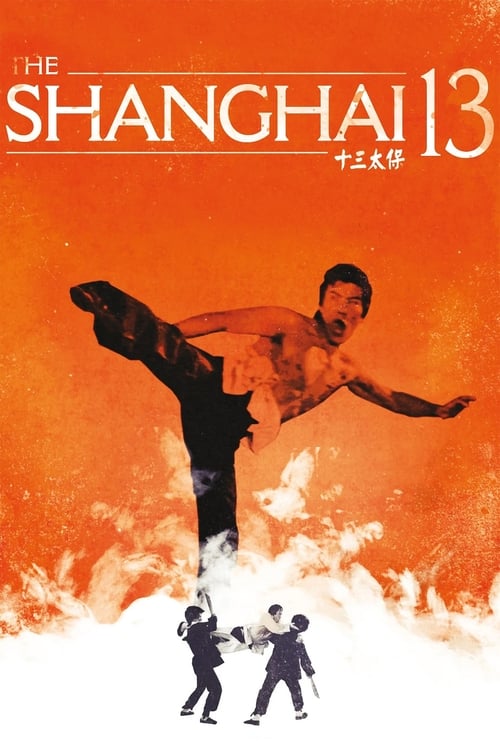
Shanghai 13
Plot
A patriot finds evidence that the government is collaborating with a foreign power. If the people knew about the deception, they would revolt and overthrow the corrupt government. One patriot in office steals the proof and must make it out of the country. He gets assistance from a local rebel leader who is in charge of a motley group of fighters called the Shanghai 13. Not all of them can be trusted, as some of them will turn in the government official. Our weak protagonist must run a gauntlet of the who's who already mentioned.
Get the Weekly Woke Watchlist
New and trending movies scored for woke bias, preachy messaging, and forced political themes — before you waste your evening.
No spam. One useful email per week.
Overall Series Review
Categorical Breakdown
Characters are judged based on their loyalty, skill, and moral choices in a high-stakes conflict, perfectly aligning with a universal meritocracy. The heroes and villains are all ethnically authentic to the historical 1930s Chinese setting. There is no focus on intersectional identity or vilification of any ethnic group; the division is purely between patriots and national traitors.
The entire plot centers on a desperate effort by patriots to defend their home and nation's integrity by exposing a traitorous faction planning to hand the country over to a foreign power. The core theme is the defense and preservation of civilization against internal corruption and external threat. The narrative demonstrates high respect for national and cultural heritage.
The movie is an all-star ensemble martial arts picture predominantly focused on male fighters, politicians, and gangsters. Masculine virtues like loyalty, protective strength, and combat expertise are central to the action. Female characters are not prominent, and there is no presence of the 'Girl Boss' trope, male emasculation, or anti-natalist messaging.
The focus is purely on a political thriller framework for non-stop martial arts action and loyalty between men. There is no discernible centering of alternative sexualities or gender ideology. The film adheres to a normative structure where sexual identity is private and irrelevant to the plot's themes of patriotism and honor.
The conflict is defined by an objective moral truth: national loyalty and honor are good, and treason and corruption are evil. Characters are driven by a sense of duty to their nation. The plot does not engage with or display any hostility toward traditional religion, nor does it promote moral relativism; the stakes of good versus evil are clear and absolute.
Get the Weekly Woke Watchlist
New and trending movies scored for woke bias, preachy messaging, and forced political themes — before you waste your evening.
No spam. One useful email per week.