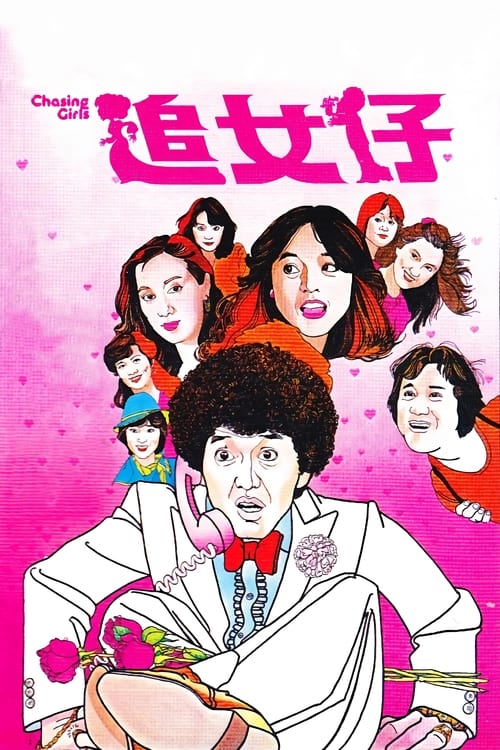
Chasing Girls
Plot
Afro-haired Robert demonstrates over and over to his gawking cousin how easy it is to pick up girls. Robert eventually narrows the field down to two girls. One is a TV model, the other a rich girl with a red sports car working as a waitress. Robert finds the part after the pickup to be a bit more difficult.
Get the Weekly Woke Watchlist
New and trending movies scored for woke bias, preachy messaging, and forced political themes — before you waste your evening.
No spam. One useful email per week.
Overall Series Review
Categorical Breakdown
The film’s main focus is on the male protagonist’s shallow pursuit of women, not race or political ideology. The main character is non-white, and his attempts to 'pick up' women are depicted as a personal flaw subject to comedic failure. The narrative is centered on merit in social and romantic skill, as the women easily outwit the men. There is no lecturing on privilege, vilification of 'whiteness,' or forced insertion of diversity; the core cast is ethnically homogeneous and the plot’s conflict is interpersonal.
The protagonist is sent back from America to his home of Hong Kong by his mother with the specific instruction to marry a 'good Chinese woman who can control him.' This narrative device reinforces the value of the home culture and family institutions as a corrective force for the son’s misbehavior abroad. There is no hostility toward Western or local civilization, and no deconstruction of heritage; the family unit is viewed as the entity responsible for setting the protagonist straight.
The women in the film are far from weak or secondary. The 'cute little waitress' proves to be the master manipulator, showing the male protagonist to be an amateur. This dynamic flips the power script by making the women the active, intelligent agents who control the courtship game. While this subverts the trope of a passive female, the story remains focused on the complementary goal of traditional heterosexual courtship and eventual marriage, as dictated by the family unit. The movie celebrates female intelligence in social dynamics rather than perfect, anti-natalist 'Girl Boss' tropes or wholesale male emasculation.
The entire plot focuses on traditional male-female pairing and courtship, driven by a mother’s desire for her son to marry a Chinese girl. The structure and conflict are entirely normative, depicting the nuclear family as the desired outcome. The film contains no elements of alternative sexual ideology, deconstruction of biological reality, or gender theory lecturing. Sexuality is depicted as a private matter tied to the pursuit of marriage.
The movie is a secular, slapstick romantic comedy with no discernible religious themes or characters. The moral framework is social and comedic, centered on character flaws (shallowness) and social dynamics (courtship and manipulation), rather than a spiritual vacuum or hostility toward religion. It operates outside a spiritual dimension altogether, neither acknowledging a transcendent morality nor actively attacking faith.
Get the Weekly Woke Watchlist
New and trending movies scored for woke bias, preachy messaging, and forced political themes — before you waste your evening.
No spam. One useful email per week.