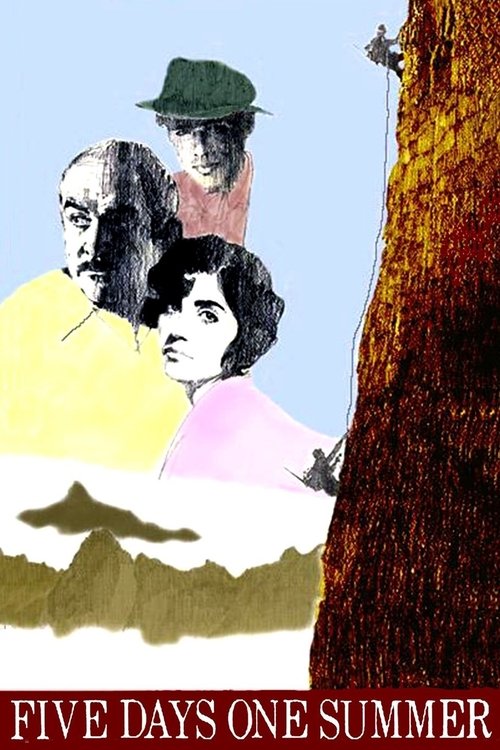
Five Days One Summer
Plot
A 1930s Scottish doctor goes climbing in the Alps with an infatuated niece he passes off as his wife.
Get the Weekly Woke Watchlist
New and trending movies scored for woke bias, preachy messaging, and forced political themes — before you waste your evening.
No spam. One useful email per week.
Overall Series Review
Categorical Breakdown
The film is a classical European-centric drama set in the 1930s featuring all white characters. The plot revolves around a personal and moral transgression (incest, infidelity, age gap), not race, intersectional characteristics, or systemic oppression. Character judgments are based on personal morality and actions, reflecting universal drama.
The narrative takes place in the picturesque Swiss Alps and follows a successful Scottish doctor and his family. The focus is on an internal, private transgression, not a critique or demonization of Western civilization, home culture, or ancestors. There is no 'Noble Savage' trope used to lecture on Western corruption.
The female protagonist, Kate, is driven by a passionate, almost obsessive, love for her uncle and is the co-owner of a family factory, yet the central conflict is a traditional love triangle and the emotional fallout of a secret relationship. The character is not portrayed as a 'Mary Sue' or 'Girl Boss'; she is deeply flawed and conflicted. The narrative avoids anti-natalist or career-over-motherhood messaging, focusing instead on her destructive romantic pursuit.
The core plot hinges entirely on a secret incestuous relationship (uncle and niece) which is a significant subversion and deconstruction of the nuclear family structure. This centers a highly alternative and forbidden sexual dynamic, rating moderately high on the 'deconstructing the nuclear family' element. However, the film entirely lacks modern 'Queer Theory' concepts, gender ideology, or framing of biological reality as bigotry.
Religion is absent from the narrative. The central conflict is purely personal, moral, and emotional. The story focuses on human choice and natural consequences (the mountain, the avalanche) without involving or attacking traditional religious institutions or faith. Morality is judged by the dramatic consequences of deceit, not subjective power dynamics.
Get the Weekly Woke Watchlist
New and trending movies scored for woke bias, preachy messaging, and forced political themes — before you waste your evening.
No spam. One useful email per week.