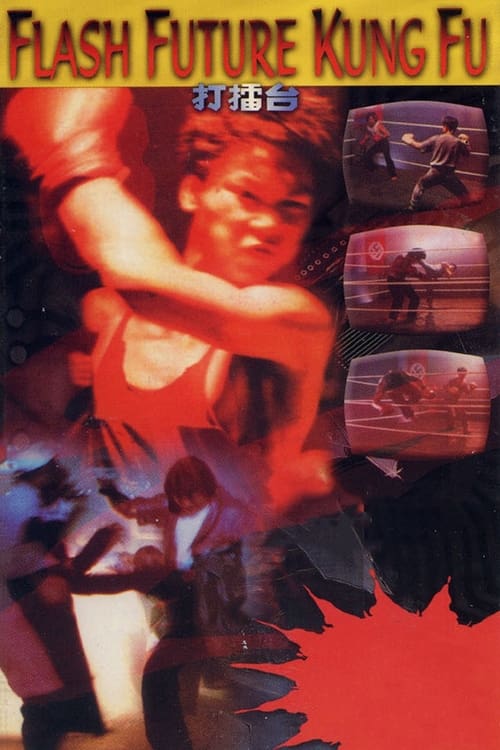
Flash Future Kung Fu
Plot
Imagine an old-school martial arts melodrama about competing fighting schools dropped into the grungy sci-fi world of Blade Runner, and you have an idea of the curious mix of styles in Flash Future Kung Fu. Eddy Ko is the maverick star pupil of an honorable school who secretly engages in underground "Black Boxing" bouts, a black market sport off limits to the school. The ambitious X-Gang, a bloodthirsty neo-Nazi-like organization, plots to take care of Ko and his friends and take over the city with their army of mind-controlled zombie soldiers. In true Hong Kong fashion, it boils down to a showdown of champions, and this one takes place in a boxing ring in an eerily empty warehouse with video coverage broadcasting the event all over.
Get the Weekly Woke Watchlist
New and trending movies scored for woke bias, preachy messaging, and forced political themes — before you waste your evening.
No spam. One useful email per week.
Overall Series Review
Categorical Breakdown
The plot is entirely driven by universal meritocracy: a clash of martial arts skill and character honor against a totalitarian criminal organization. The casting is historically authentic to its Hong Kong setting, and the antagonists are a group of Chinese 'Neo-Nazis,' which means the conflict is ideological, not racial, and does not vilify 'whiteness.'
The central theme is the defense of core traditional institutions—the honorable, disciplined Chinese Kung Fu school—against an existential threat, which is a totalitarian, dystopian force modeled on a Western-originated ideology (Nazism). The narrative views ancestral values and discipline as a 'shield against chaos' and social decline.
The main characters and the core conflict revolve around male-dominated martial arts schools, specifically the Master-student dynamic. The primary female character, the Mother, plays a supportive role to the male hero, acting as a crucial informant and rescuer, but not as a central 'Girl Boss' figure. The narrative avoids 'Mary Sue' tropes and focuses on male action and conflict.
The narrative adheres to a normative structure, with the hero protecting a threatened female and her daughter, implicitly defending a traditional family unit. The martial arts world is male-focused. There is no focus on alternative sexualities, deconstruction of the nuclear family, or lecturing on gender ideology.
The film’s moral framework pits the disciplined, honorable tradition of the Kung Fu school against the nihilistic, drug-using, mind-controlling forces of the X-Gang. This functions as a conflict between Transcendent Morality (honor, discipline) and subjective 'power dynamics'/chaos. Traditional moral wisdom is presented as a source of strength against dystopian evil.
Get the Weekly Woke Watchlist
New and trending movies scored for woke bias, preachy messaging, and forced political themes — before you waste your evening.
No spam. One useful email per week.