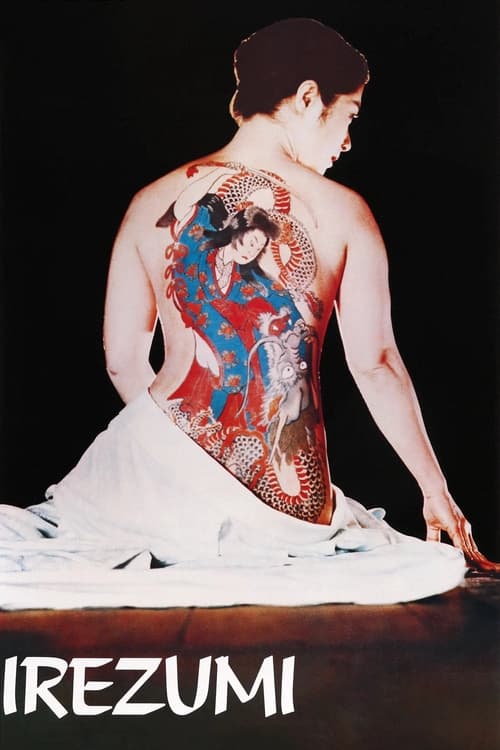
Irezumi
Plot
To satisfy her lover's fetish for tattooed women, Akane agrees to have her body covered in eloborate tattoos by Kyogoro, an old craftsman. Kyogoro has developed a special technique, by which his assistant, Harutsune, keeps Katsuko's mind off the pain while Kyogoro does his work. After the work is done, Harutsune makes the shocking discovery of how Kyogoro mastered his technique.
Get the Weekly Woke Watchlist
New and trending movies scored for woke bias, preachy messaging, and forced political themes — before you waste your evening.
No spam. One useful email per week.
Overall Series Review
Categorical Breakdown
The film is a Japanese-produced drama focused entirely on Japanese characters, cultural traditions, and internal conflicts. It contains no elements of vilification of 'whiteness,' forced diversity, or a narrative framed around systemic oppression or immutable characteristics. Character actions are judged on individual merit, obsession, and passion.
The narrative centers on an exploration of Japanese cultural artistry and deep-seated themes like fate and obsession. The critique is internal, exploring a darker, stigmatized part of Japanese tradition (irezumi) and its social perception. There is no hostility toward Western civilization, its ancestors, or core institutions.
The core plot is a woman's deliberate and agonizing physical transformation, undertaken initially to satisfy a man's fetish. The transformation grants her a new, aggressive power and changes her destiny, positioning her as a figure of formidable and manipulative influence. The men in the story are largely portrayed as weak, driven by uncontrollable desire, or obsessively focused on the female body as an object of art, which frames the female protagonist as the ultimate source of dark, controlling power.
The story's central dramatic tension is built around a traditional heterosexual relationship, a male fetish, and a woman's transformation. There is no centering of alternative sexualities, deconstruction of the nuclear family, or reference to modern gender ideology.
The film deals with spiritual and supernatural elements tied to the art of the tattoo, folklore, and fate. This explores a dark, pre-modern, or pagan-like spiritualism that is endemic to Japanese cultural motifs. It contains no hostility toward, or deconstruction of, Christianity or other Western religions.
Get the Weekly Woke Watchlist
New and trending movies scored for woke bias, preachy messaging, and forced political themes — before you waste your evening.
No spam. One useful email per week.