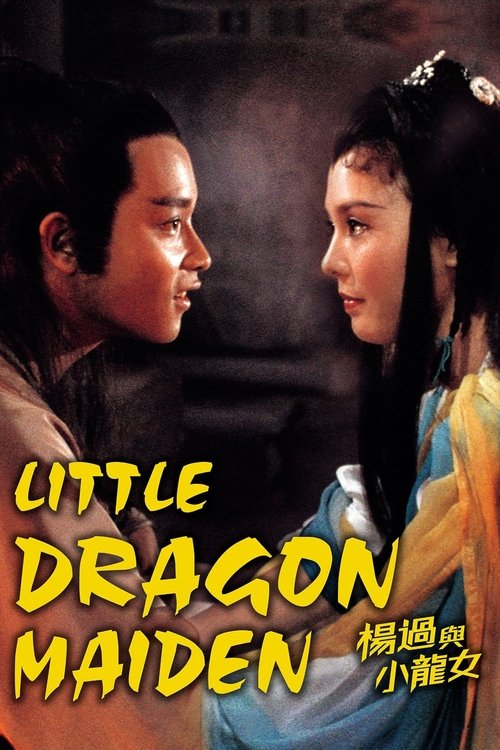
Little Dragon Maiden
Plot
Seeking to improve his combat skills, a young man falls in love with a woman with mystical powers but his past stands in the way of their union.
Get the Weekly Woke Watchlist
New and trending movies scored for woke bias, preachy messaging, and forced political themes — before you waste your evening.
No spam. One useful email per week.
Overall Series Review
Categorical Breakdown
The narrative operates entirely within the traditional context of Chinese martial arts cinema. Characters are judged based on their personal merit, combat skill, and honor, not on an immutable characteristic like 'race.' The cast is racially authentic to the story's setting, featuring no vilification of 'whiteness' or forced diversity, as the movie is a Hong Kong production from 1983.
The story is fundamentally patriotic, involving a central conflict where the heroes must ultimately defend their civilization against a major foreign power (the Mongols). The overarching framework is one of Chinese chivalry and loyalty to one's nation. The narrative respects the institutions and historical heritage of the home culture.
The Little Dragon Maiden is a powerful, highly-skilled martial arts master with mystical powers who trains the male lead. She is a strong female character, but her strength is complementary to the male protagonist's development, and the core of the plot is their passionate, traditional romance. The message is one of vitality and complementary pairing, not anti-natalism or the emasculation of men.
The narrative is a traditional, passionate male-female love story focused on the relationship between Yang Guo and the Little Dragon Maiden. The film's entire structure is based on a normative, heterosexual pairing and the drama of their socially forbidden union. No centering of alternative sexualities, deconstruction of the nuclear family, or lecturing on gender theory is present.
The story is set within a morally structured universe where 'good' (chivalry) and 'evil' (greed, betrayal, foreign aggression) are objective. Corrupt practitioners of religion, such as the abusive Taoist monks at the academy and the villainous Tibetan monk, appear as antagonists. This critiques religious hypocrisy and specific institutions rather than attacking the concept of transcendent morality or objective truth itself.
Get the Weekly Woke Watchlist
New and trending movies scored for woke bias, preachy messaging, and forced political themes — before you waste your evening.
No spam. One useful email per week.