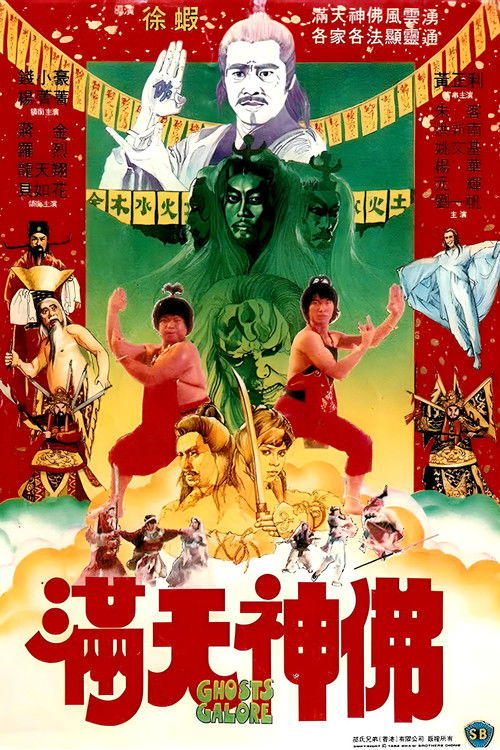
Ghosts Galore
Plot
Veteran Lo Lieh, once again playing an evil black-magic priest, unleashes some particulary nasty Japanese ghosts on a peaceful Chinese village.
Get the Weekly Woke Watchlist
New and trending movies scored for woke bias, preachy messaging, and forced political themes — before you waste your evening.
No spam. One useful email per week.
Overall Series Review
Categorical Breakdown
The main conflict is ethnic, pitting Chinese heroes against Japanese supernatural villains, but the narrative immediately complicates this. The main hero, Lu Xing, argues for universal justice to protect a Japanese ninja woman (Junko) who renounced her evil clan, compelling the righteous Chinese master to overcome his initial national prejudice. Character merit and the pursuit of a higher moral duty are the ultimate deciding factors for alliance and action.
The entire story revolves around defending a 'peaceful Chinese village' from external harm, explicitly affirming and celebrating the home culture. The core institutions and figures, such as the sifu and Taoist sorcerers, are the moral and magical shield against chaos. The narrative respects the wisdom and sacrifices of the ancestors and institutions that maintain order, with no suggestion that the home culture is fundamentally corrupt or racist.
Gender roles are conventional for the genre, with the main heroic figures and their mentor being male. The female character, Junko, is a competent ninja but is still heroically rescued by the male lead. Another key female figure is a 'lovelorn lady ghost.' The narrative contains no elements of 'Girl Boss' messaging, emasculation, or critique of natalism. It presents a distinct but complementary male-female dynamic within a traditional structure.
The narrative's focus on low-brow comedy includes a male character who is reluctant to give up sex, reinforcing a traditional heterosexual dynamic. The plot is entirely devoid of alternative sexual or gender ideologies. The traditional male-female pairing and the familial/communal structure of the village are the unstated standard for society, with no lecturing on queer theory or deconstruction of the nuclear family.
The film's world is fundamentally spiritual, revolving around a battle between righteous Taoist magic and 'evil black-magic.' Spirituality is the source of all power, both good and evil, with the good side (Master Lin) upholding objective moral truth against wickedness. Faith and supernatural ability are presented as vital tools for combating evil and restoring order, with no hostility toward traditional religion.
Get the Weekly Woke Watchlist
New and trending movies scored for woke bias, preachy messaging, and forced political themes — before you waste your evening.
No spam. One useful email per week.