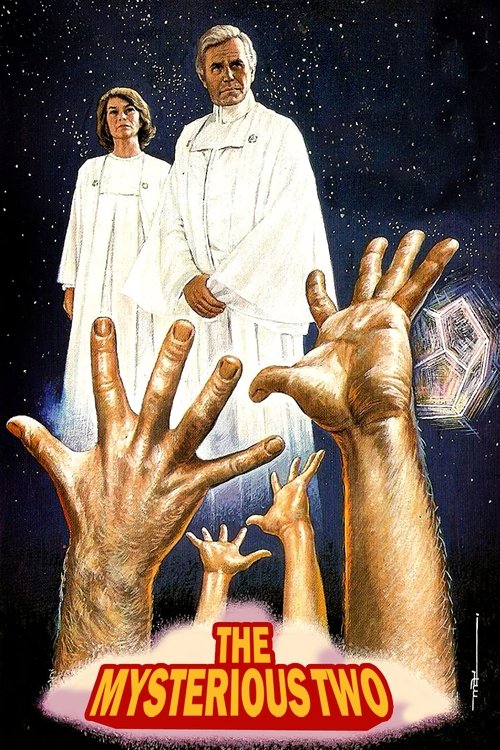
Mysterious Two
Plot
Two Aliens visit the Earth in an effort to enlist converts to travel the universe with them.
Get the Weekly Woke Watchlist
New and trending movies scored for woke bias, preachy messaging, and forced political themes — before you waste your evening.
No spam. One useful email per week.
Overall Series Review
Categorical Breakdown
The casting is colorblind for minor followers, including a black couple, and the 'Mysterious Two' and the main investigator characters are white. The narrative does not focus on race, immutable characteristics, or intersectional hierarchy. The followers are drawn from various social classes, suggesting the cult's appeal is universal to the 'disenchanted,' not targeted at a specific identity group's systemic oppression.
The cult preaches the abandonment of one's entire earthly life, possessions, and relationships to join an 'extraterrestrial race' known as 'The People of Tomorrow' for a life in 'harmony' on a different planet. This premise frames the Earth, and by extension, one's home civilization, as fundamentally corrupt or inadequate, requiring total rejection for a spiritually superior, alien existence. This aligns closely with the hostility toward one's home for an idealized 'other' culture.
The cult actively works to tear apart traditional nuclear families and 'husband and wife' pairings, with followers abandoning their spouses and homes. Furthermore, the cult leaders explicitly state that children are not allowed on the voyage, presenting a strong anti-natalist message that rejects the continuation of the human family structure. The female leader, 'She,' shares authority with 'He,' but is not overtly a 'Girl Boss' as the pair operates in tandem, and the primary critique is on the anti-family outcome of the cult.
The movie contains no centering of alternative sexualities, deconstruction of gender identity, or lecturing on queer theory. The central relationships that are broken by the cult are all traditional male-female pairings. The structure of the cult's leadership is a binary 'He and She,' suggesting a normative male-female pairing as the standard.
The core of the plot is a quasi-religious cult that preys on people's search for spiritual fulfillment, which is otherwise lacking in their modern lives. The cult replaces traditional morality and religion with a vague, subjective 'enlightenment' promising transcendence via an alien 'higher moral law.' While the film is a critique of *false* prophets, the narrative still valorizes an external, non-traditional spirituality (the 'People of Tomorrow') as the answer to the failures of the current moral structure.
Get the Weekly Woke Watchlist
New and trending movies scored for woke bias, preachy messaging, and forced political themes — before you waste your evening.
No spam. One useful email per week.