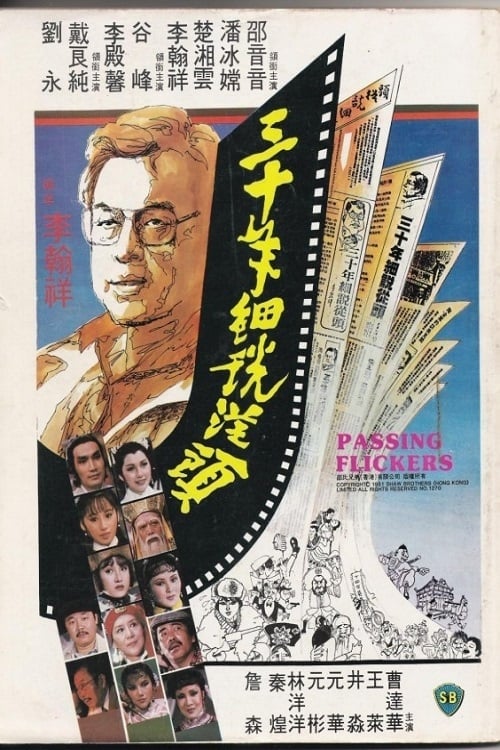
Passing Flickers
Plot
The main characters - the arrogant, harassed director, the sexy starlet, or naïve actors are familiar enough stereotypes. Along the way however, there is some fun to be had as more humorous incidents occur on the sound stage, together with dashes of nudity. Some of the events are presumably inspired by real life experiences, others have a distinct air of wishful fabrication. The over-the-top Kung Fu star, deserted by director and crew as he goes through his pointless extended routine, for instance. Or the action heroes, sweating in furs while they dutifully munch through their meal scene, 'snow' falling outside in studio land.
Get the Weekly Woke Watchlist
New and trending movies scored for woke bias, preachy messaging, and forced political themes — before you waste your evening.
No spam. One useful email per week.
Overall Series Review
Categorical Breakdown
Characters are standard industry stereotypes defined by their roles and personal flaws, such as the arrogant director. The film is a universal satire of human folly in the movie business. There is no narrative focus on race, privilege, or systemic oppression, and no vilification of any specific group based on immutable characteristics.
The film satirizes the immediate, professional culture of the film studio and its personalities, which is not a deconstruction or demonization of the filmmaker's home culture, nation, or ancestors. The focus is on behind-the-scenes chaos and ego, not civilizational self-hatred.
The narrative features a 'sexy starlet' and male crewmen visiting a brothel with 'unglamourous working girls,' alongside 'dashes of nudity.' This content focuses on sexualized and stereotypical roles for women, which is the opposite of the 'Girl Boss' or anti-natalism tropes. The men are flawed but are not consistently emasculated for the purpose of promoting a perfect female lead.
The plot contains no elements of centering alternative sexualities, deconstructing the nuclear family, or promoting gender ideology. The sexual dynamics presented are entirely traditional and transactional, typical of a cynical studio comedy from this era.
The plot is entirely focused on the secular, ego-driven, and financial vices of the film industry. Traditional religion is not a factor in the narrative, and there is no hostility directed toward Christianity or any other faith. Morality is subjective due to the setting's cynicism, but it is not framed as a philosophical attack on objective truth.
Get the Weekly Woke Watchlist
New and trending movies scored for woke bias, preachy messaging, and forced political themes — before you waste your evening.
No spam. One useful email per week.