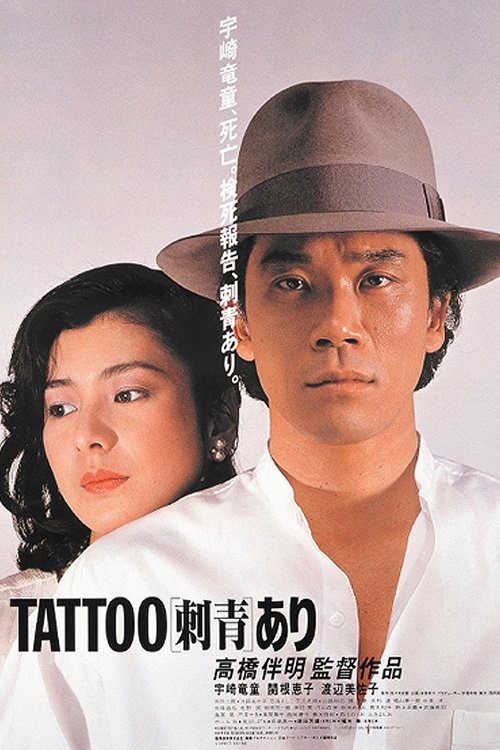
Tattoo
Plot
An ardent culture-vulture youth, previously charged for the murder of a woman when he was young, plans to hold hostage a local bank.
Get the Weekly Woke Watchlist
New and trending movies scored for woke bias, preachy messaging, and forced political themes — before you waste your evening.
No spam. One useful email per week.
Overall Series Review
Categorical Breakdown
The film is a Japanese production focused on a Japanese criminal in Japan, based on a real-life case. The narrative centers on the psychological decline and sociopathic nature of the individual protagonist, Akio Takeda, not on group identity, race, or immutable characteristics. Character merit is nonexistent for the villain, who is judged on the content of his appalling actions.
The film is not a critique of Western civilization, so the primary definition of Oikophobia does not apply. As a 'genuine social drama,' it examines a criminal's life within a Japanese societal context. The film's primary focus is on the psychological portrait of a killer, but it implicitly examines deviance within the home culture, warranting a minimal score, but it does not frame the entire culture as fundamentally corrupt or racist.
The male protagonist is explicitly portrayed as violent and misogynistic. The narrative showcases the damage this toxic masculinity inflicts on the women in his life, including his lover and mother. This depiction of the male lead as sociopathic and toxic is a strong indictment of a negative male archetype. However, the women are also portrayed as 'victims also of their own mind,' and the mother's intense, unconditional attachment is framed as a tragic flaw, which slightly pulls back from a simple 'men are toxic, women are perfect' lecture.
The plot is a psychological crime drama focused on a heterosexual male killer. There is no indication of centering alternative sexualities, gender ideology, or deconstructing the nuclear family. The presentation is normative for a film of its time and genre, with sexuality being a private aspect of the criminal's relationships.
The film is a secular crime drama, not directly engaging with religion or spirituality. The narrative portrays the protagonist's actions in 'all his appalling glory, giving him no excuses,' which suggests an acknowledgment of a moral reality rather than an embrace of subjective power dynamics or moral relativism. The focus is on criminal psychology, not a critique of religious faith or Christianity.
Get the Weekly Woke Watchlist
New and trending movies scored for woke bias, preachy messaging, and forced political themes — before you waste your evening.
No spam. One useful email per week.