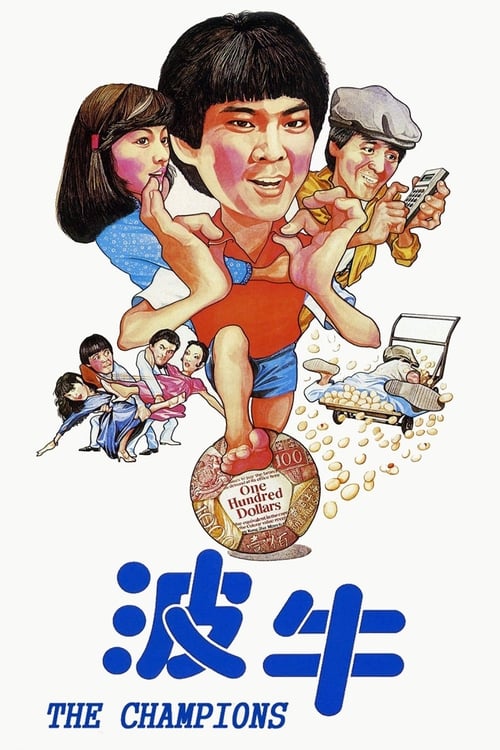
The Champions
Plot
An acrobatic country hick is forced flee his village after injuring a wealthy socialite during an innocent competition. Fresh off the boat, he runs into a struggling football team who discover his talents.
Get the Weekly Woke Watchlist
New and trending movies scored for woke bias, preachy messaging, and forced political themes — before you waste your evening.
No spam. One useful email per week.
Overall Series Review
Categorical Breakdown
The narrative is entirely a story of Universal Meritocracy. The protagonist's success is based solely on his inherent physical talent and determination, a 'fish-out-of-water' tale of skill overcoming adversity and corruption. All characters are of the same East Asian background, and the central conflict is class-based (rural vs. urban/wealthy elite) and character-based (humble hero vs. arrogant villain), with no reference to race, intersectional hierarchy, or 'whiteness' vilification.
The film is a Hong Kong production and is not a critique of 'Western Civilization.' The conflict is internal to its society—between a pure-hearted country man and the corruption and cynicism of the city's sports elite/gamblers. The movie champions the individual's honest pursuit of excellence against corruption, not hostility toward its own culture or ancestors. The film's primary message is one of integrity and hard work.
The core plot is a male-centric underdog sports story focused on the male protagonist and his rivalry with a male antagonist. The main female character, Fanny (played by Moon Lee), is supportive and integral to the hero’s emotional arc and progression, but the focus remains on the male lead's physical prowess and journey. Her role is complementary, and there is no messaging about motherhood as a 'prison' or emasculation of the male characters, who are defined by their strength and skill.
The film is a 1983 sports comedy. The core relational structure is normative, focusing on the male-female relationship between the protagonist and Fanny. Sexual identity is not a plot point, is kept private, and there is no attempt to center alternative sexualities, deconstruct the nuclear family, or introduce gender ideology. The focus is entirely on the sports competition and personal growth.
Religion is not a factor in the film's plot, which revolves around a sports championship and criminal corruption (gambling/match-fixing). The moral framework is objective: honesty, hard work, and fair play are good; cheating, corruption, and bullying are evil. The hero fights for a transcendent moral law of justice and merit in sport, not subjective 'power dynamics.' There is no hostility toward Christianity or traditional religion.
Get the Weekly Woke Watchlist
New and trending movies scored for woke bias, preachy messaging, and forced political themes — before you waste your evening.
No spam. One useful email per week.