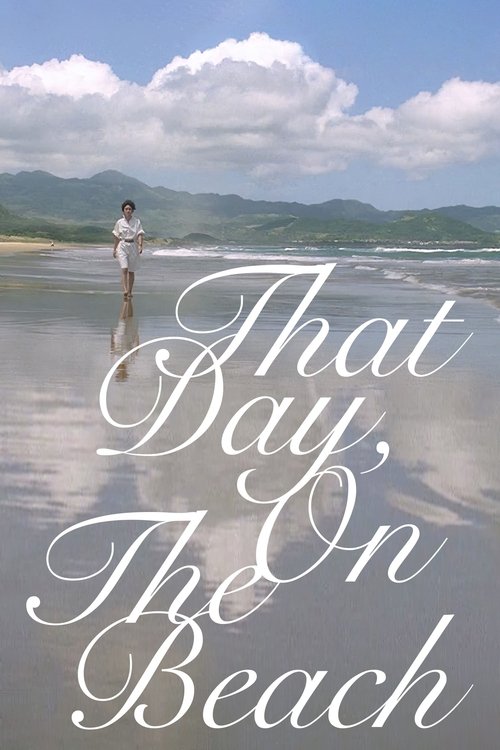
That Day, on the Beach
Plot
Two friends who haven't seen each other for thirteen years reunite. One is a successful concert pianist just back from a European tour and the other has just started a new business.
Get the Weekly Woke Watchlist
New and trending movies scored for woke bias, preachy messaging, and forced political themes — before you waste your evening.
No spam. One useful email per week.
Overall Series Review
Categorical Breakdown
The film’s central conflict is not based on race, ethnicity, or immutable characteristics in an intersectional sense. The conflict is internal to Taiwanese society, focusing on intergenerational and gender-based pressures. Character worth is defined by personal ambition, professional success (pianist, entrepreneur), and the search for personal meaning, not by racial hierarchy.
The film functions as a critique of a specific moment in Taiwanese society, contrasting its rapid modernization with the 'fourth-century B.C. ideology' of patriarchy and traditional family life. The narrative showcases the damage inflicted by the rigid, traditional family unit (represented by the father enforcing an arranged marriage), aligning with hostility toward a specific oppressive aspect of one's heritage, but it does not represent a blanket condemnation or 'self-hatred' of the culture as fundamentally corrupt.
The core of the story is the struggle of two highly successful female leads (pianist, businesswoman) against patriarchal expectations. The message is explicit that society and traditional marriage, which is framed as restrictive and unfulfilling, 'tears men and women apart.' Men are portrayed as either ineffectual victims of tradition or as negligent, oppressive figures whose careerism and infidelity destroy the home. Career and self-actualization are presented as the paths to fulfillment, while marriage is shown as a source of female misery.
The narrative operates entirely within a normative, heterosexual structure. The focus is on the failure of male-female romantic and marital relationships due to societal and economic pressures. There is no presence of alternative sexualities, gender ideology, or deconstruction of the nuclear family outside of the depiction of its breakdown due to heterosexual conflict.
The film's critique is aimed at social, economic, and patriarchal structures, not at organized religion or spirituality. The conflicts and moral failings stem from traditional family values and capitalism's effect on personal relationships, rather than a focus on faith being a source of evil. Morality is centered on personal integrity and social authenticity.
Get the Weekly Woke Watchlist
New and trending movies scored for woke bias, preachy messaging, and forced political themes — before you waste your evening.
No spam. One useful email per week.