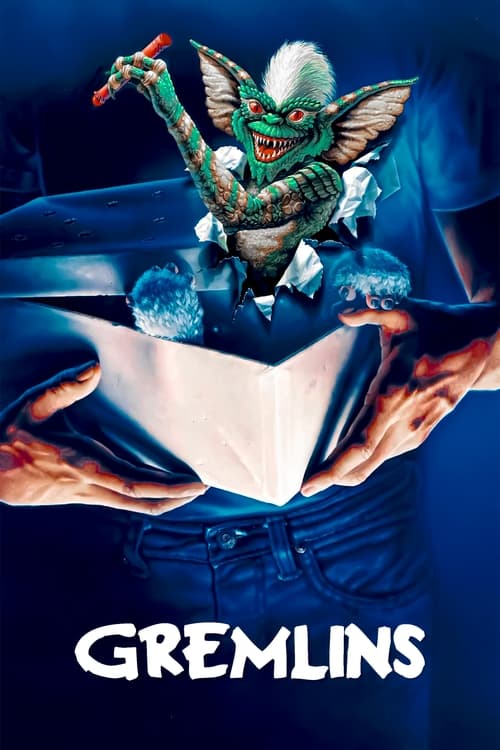
Gremlins
Plot
After receiving an exotic small animal as a Christmas gift, a young man inadvertently breaks three important rules concerning his new pet, which unleashes a horde of malevolently mischievous creatures on a small town.
Get the Weekly Woke Watchlist
New and trending movies scored for woke bias, preachy messaging, and forced political themes — before you waste your evening.
No spam. One useful email per week.
Overall Series Review
Categorical Breakdown
The narrative places the blame for the town's devastation squarely on a white male, Rand Peltzer, whose impulse-driven greed and failure to follow the rules causes the disaster. The mysterious and wise Mr. Wing, an elderly Chinese man, is the source of the creature and gives a final lecture on the irresponsibility and unworthiness of Westerners to possess such powerful secrets. Other white archetypes, such as the nativist, anti-foreigner character Mr. Futterman and the wealthy, cruel Mrs. Deagle, are explicitly ridiculed and suffer severe, sometimes fatal, consequences.
The film functions as a direct, satirical assault on the American small-town setting, specifically the seemingly perfect Christmas aesthetic, framing it as fundamentally corrupt and deserving of chaos. The core villain is unchecked American consumerism and reckless innovation, epitomized by Rand Peltzer's failed, shoddy products and capitalist mentality. The town's institutions and the white family unit are unable to contain the chaos and are instead portrayed as the catalyst for the destruction, which is a key element of civilizational self-hatred.
The female characters are not depicted using 'Girl Boss' tropes; Billy's mother is a competent and protective housewife who successfully defends her home against the Gremlins using household items like a microwave and a blender. The main female protagonist, Kate, is not a 'Mary Sue' and works as a bartender, but she is a capable and vital partner to the male lead. The film features a traditional, complementary relationship structure and avoids anti-natalist or gender-lecturing themes.
The movie adheres to a normative structure where the primary relationship is a male-female pairing. The narrative contains no presence of overt sexual ideology, alternative sexualities are not centered, and there is no discussion or instruction on gender theory.
The critique is directed primarily at the commercialized American celebration of Christmas, which is shown to be a time of greed and hypocrisy, rather than a direct assault on Christian faith or religious characters. The Mogwai and its strict rules (don't get wet, keep out of light, don't feed after midnight) are treated with reverence and serve as an objective moral law that, when broken, causes supernatural consequences. The final message from Mr. Wing is a lesson on moral responsibility and transcendence, not moral relativism.
Get the Weekly Woke Watchlist
New and trending movies scored for woke bias, preachy messaging, and forced political themes — before you waste your evening.
No spam. One useful email per week.