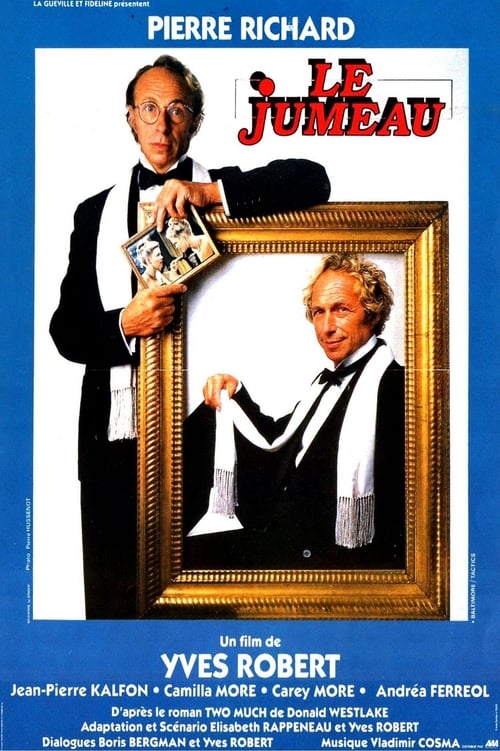
The Twin
Plot
Matthias Duval is in love, but he can't choose between the two twin sisters Betty and Liz Kerner. To pick up the two sisters, he invents his own twin brother and will play both characters.
Get the Weekly Woke Watchlist
New and trending movies scored for woke bias, preachy messaging, and forced political themes — before you waste your evening.
No spam. One useful email per week.
Overall Series Review
Categorical Breakdown
The narrative is based on a comedic plot of financial desperation and deception among characters who are culturally French and American. There is no reliance on race or immutable characteristics to drive the plot, nor is there any critique or vilification of 'whiteness.'
The film is a lighthearted French comedy that satirizes the financial troubles and personal greed of the protagonist. It focuses on internal, individual failings and romantic deceit, not on the fundamental corruption or racism of Western civilization or the demonization of ancestors.
The women’s inheritance is contingent on marriage, which is a traditionally restrictive, anti-agency premise. However, the twin sisters are ultimately portrayed as cunning and fully aware of the man’s deception. The final choice of a happy 'ménage à trois' subverts the concept of traditional marriage for female sexual and relational agency and wealth control, which leans toward an anti-natal/anti-traditional family message.
The plot centers on a heterosexual love triangle turned into a *ménage à trois*. While the final relationship structure is non-normative and subverts the nuclear family, it is a heterosexual polyamorous arrangement. The narrative does not focus on alternative sexual identities, gender ideology, or framing biological reality as bigotry.
The film is a secular farce centered on money, romance, and deception. There is no direct hostility toward traditional religion, nor are Christian characters used as villains or bigots. The morality is entirely subjective to the comedic plot, not a philosophical lecture on moral relativism.
Get the Weekly Woke Watchlist
New and trending movies scored for woke bias, preachy messaging, and forced political themes — before you waste your evening.
No spam. One useful email per week.