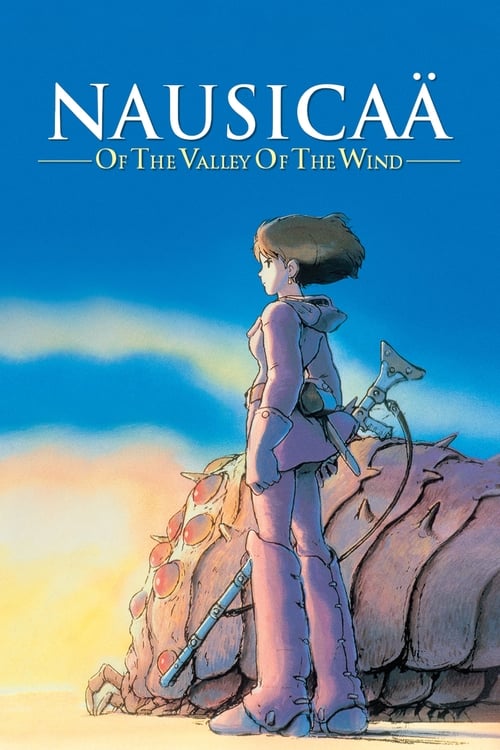
Nausicaä of the Valley of the Wind
Plot
After a global war, the seaside kingdom known as the Valley of the Wind remains one of the last strongholds on Earth untouched by a poisonous jungle and the powerful insects that guard it. Led by the courageous Princess Nausicaä, the people of the Valley engage in an epic struggle to restore the bond between humanity and Earth.
Get the Weekly Woke Watchlist
New and trending movies scored for woke bias, preachy messaging, and forced political themes — before you waste your evening.
No spam. One useful email per week.
Overall Series Review
Categorical Breakdown
Characters are judged purely by their actions, morality, and ideological alignment (pacifist vs. militarist), not by any immutable characteristics. All nations depicted appear visually homogeneous, eliminating any focus on racial dynamics or forced diversity. The film adheres to a universal meritocracy where a character's worth is based on their soul and deeds.
The central conflict revolves around the sins of the 'ancestors,' whose advanced industrial civilization caused the apocalyptic 'Seven Days of Fire' and created the poisonous world. The narrative strongly demonizes the heritage of technology, industrialization, and militarism, presenting the 'Noble Savage' archetype in the form of the Valley of the Wind's peaceful, low-tech community, which lives in harmony with nature. This self-critique of human civilization and its historical path is a primary theme.
The main protagonist, Nausicaä, is an instantly perfect and universally respected leader, diplomat, and warrior who is shown to be superior in vision and competence to nearly all male and female authority figures. She is the 'Girl Boss' who fulfills the messianic prophecy and saves the world through her unique gifts and compassion. The film features another major female character, Princess Kushana, as a powerful military commander, reinforcing female dominance in high-ranking, executive roles. The male lead figures are reduced to supportive roles as a wise elder and an admirer, aligning with the emasculation trope, though Nausicaä herself exhibits a blend of traditionally masculine and feminine virtues.
The movie contains no references to alternative sexualities, gender identity issues, or the deconstruction of the nuclear family structure. The narrative focus is entirely on survival, war, and humanity's relationship with nature. The structure is normative with no political lecturing on sexual ideology.
The story's climax fulfills an ancient prophecy of a 'blue-clad one,' giving the entire narrative a spiritual and messianic structure. However, this is a non-traditional, nature-focused spirituality that replaces traditional faith with an ecological reverence. The narrative does not specifically target or vilify established traditional religion, such as Christianity, but frames the highest moral law as coexistence with nature rather than a transcendent, revealed truth, placing its morality in a subjective, ecological framework.
Get the Weekly Woke Watchlist
New and trending movies scored for woke bias, preachy messaging, and forced political themes — before you waste your evening.
No spam. One useful email per week.