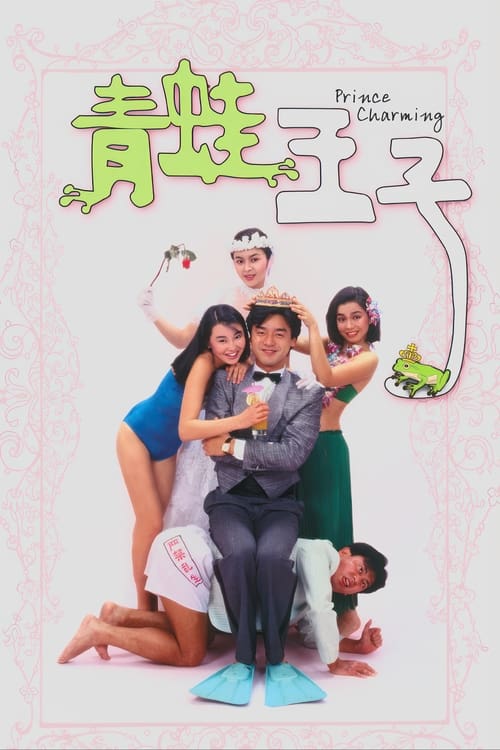
Prince Charming
Plot
Chen Li is the son of an enormously wealthy Hong Kong businessman and is vacationing in Hawaii, experiencing typical girl problems. His lothario friend Lolanto flies in from Hong Kong and is determined to find Chen Li a girl within a few days. After a series of hijinks, Chen Li and Lolanto are back in Hong Kong and investigating high-level embezzling in Chen's father's corporation. It also turns out that Kitty and May are employed there as well, with Kitty being the secretary of the supposed embezzler. Because Chen has been notoriously inconspicuous and no one knows what he looks like, he is able to assume to role of a limousine driver for Lolanto, who takes on the persona of Chen Li himself. While tracking down the corruption, Lolanto and Chen also are trying to win the hearts of the two women, but are they looking for true love or only money?
Get the Weekly Woke Watchlist
New and trending movies scored for woke bias, preachy messaging, and forced political themes — before you waste your evening.
No spam. One useful email per week.
Overall Series Review
Categorical Breakdown
The movie is a Hong Kong production with an all-Asian cast, so the concept of vilifying 'whiteness' is not present. The central conflict is a universal one about character versus class, as the rich protagonist proves his worth while disguised as a chauffeur, demonstrating that character merit is the ultimate judge.
The movie is a popular, aspirational Hong Kong comedy that celebrates a rapidly modernizing society. It focuses on local dynamics, like business and romance, and shows no hostility toward its own culture or ancestors. The institutions of family and business are the setting for the romantic and comedic plot.
The core plot is about the men actively pursuing the women, but the women are also portrayed as independent and tricky, at one point drugging the men. The men are initially bumbling and incompetent in romance, but the narrative arc is a traditional one where the male protagonists grow and successfully win the women's hearts. The women are the romantic objective, and the focus is on a heterosexual pairing.
The story is a traditional, entirely heterosexual romantic comedy focused on two male-female pairings. The narrative includes a desire for a love match to avoid an arranged marriage, affirming the normative structure of family formation without any sexual ideology or deconstruction of the nuclear family.
The plot is strictly a comedy and romance about corporate corruption and dating. The film contains no religious themes or references and offers no critique of faith or embrace of moral relativism. The primary moral lessons are universal: honesty, love, and true character over social status.
Get the Weekly Woke Watchlist
New and trending movies scored for woke bias, preachy messaging, and forced political themes — before you waste your evening.
No spam. One useful email per week.