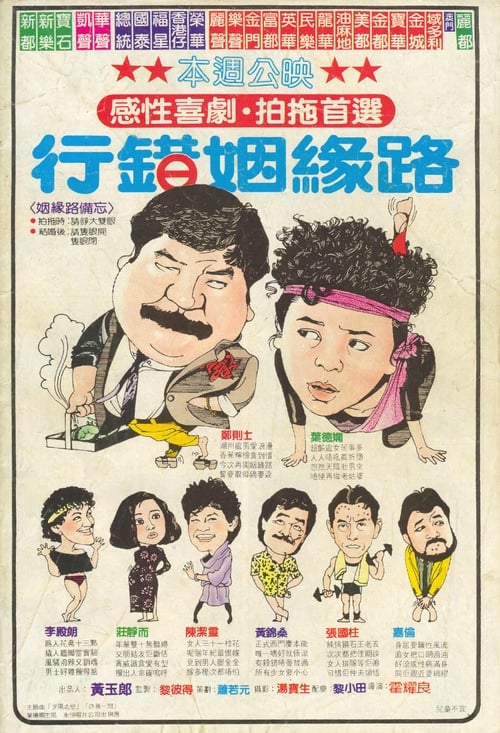
Wrong Wedding Trail
Plot
Wrong Wedding Trail is a Hong Kong Romance starring Kent Cheng.
Get the Weekly Woke Watchlist
New and trending movies scored for woke bias, preachy messaging, and forced political themes — before you waste your evening.
No spam. One useful email per week.
Overall Series Review
Categorical Breakdown
The plot centers on romantic misadventure and personal ambition, not on race or intersectional hierarchy. The main male lead, a Chaozhou food stall worker, is defined by his character and ambition, not by his class or minority status within Hong Kong society as a point of systemic oppression. All major characters are East Asian, and the concept of 'vilification of whiteness' is irrelevant to the narrative. Characters rise and fall based on their own choices and personal merit.
The film is a localized Hong Kong comedy, not a critique of Western civilization or Chinese ancestry. The plot focuses on local social customs and the personal choice to pursue love and a better life (including emigration to the US), which is a common 80s HK theme of ambition rather than civilizational self-hatred. Local institutions like family and business are the setting for the personal drama, not the targets of demonization.
The movie explores the complexities of women’s roles in modern romance, but does not promote the 'Girl Boss' trope. The lead female's goal is a traditional marriage and family, albeit one she struggles to achieve due to her conservative nature and her friend's sabotage. The score rises slightly due to the subplot of the sister who consciously chooses to have and raise a child from a married man, an action that challenges the traditional nuclear family structure and celebrates independence outside of a traditional male-protective framework, pushing the score beyond a perfect '1'.
The narrative is strictly focused on traditional male-female pairings and the pursuit of heterosexual marriage. The subject matter is a romantic comedy about finding the right spouse. There is no centering of alternative sexualities, deconstruction of gender as ideology, or discussion of LGBTQ+ themes.
The film is a secular romantic comedy with no engagement with religious or spiritual themes. The core conflicts are social and emotional, driven by human miscommunication, personal flaws, and ambition. There is no hostility toward religion, specifically Christianity, and moral issues are addressed via personal consequences rather than a theological framework.
Get the Weekly Woke Watchlist
New and trending movies scored for woke bias, preachy messaging, and forced political themes — before you waste your evening.
No spam. One useful email per week.