Brazil
Plot
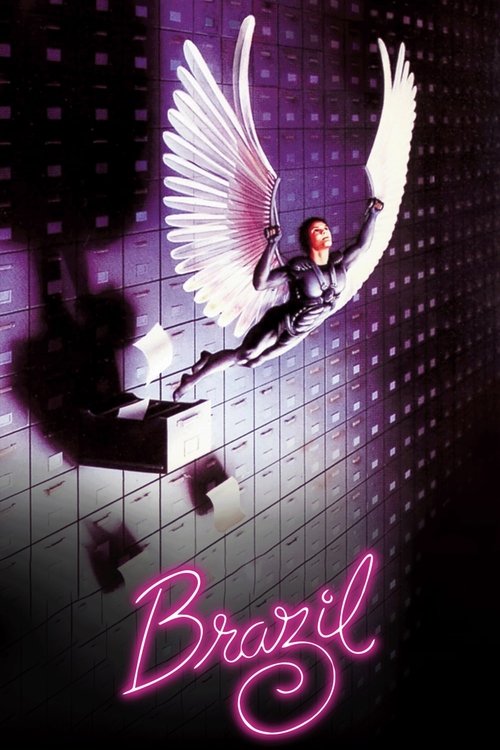
Low-level bureaucrat Sam Lowry escapes the monotony of his day-to-day life through a recurring daydream of himself as a virtuous hero saving a beautiful damsel. Investigating a case that led to the wrongful arrest and eventual death of an innocent man instead of wanted terrorist Harry Tuttle, he meets the woman from his daydream, and in trying to help her gets caught in a web of mistaken identities, mindless bureaucracy and lies.
Get the Weekly Woke Watchlist
New and trending movies scored for woke bias, preachy messaging, and forced political themes — before you waste your evening.
No spam. One useful email per week.
Overall Series Review
Categorical Breakdown
The narrative does not operate through the intersectional lens; the primary conflict is the individual's struggle against an overwhelming, incompetent, and amoral bureaucratic system. Character status is defined by their position within the Ministry or their role as a rebel, not by race or immutable characteristics. The central theme revolves around imagination, individuality, and merit being crushed by systemic corruption.
The film satirizes a Western-styled, consumerist, industrial, and hyper-bureaucratic society that has decayed into a chaotic totalitarian state. The home culture is framed as fundamentally corrupt and spiritually empty, but this critique is aimed at the administrative-consumerist mechanisms, not at national heritage or ancestors. It does not champion a 'Noble Savage' or an alternative culture as superior; the only escape is a personal, internal fantasy.
The score is elevated due to the negative portrayal of male figures in power and the dynamics of the romantic leads. Male authority figures (Ministry officials) are consistently depicted as bumbling, shallow, or monstrous villains. The female love interest, Jill Layton, is an independent, capable truck driver and activist who acts as the real-world catalyst for the passive male protagonist's growth and rebellion. However, the protagonist's mother is a negative figure representing the corrupt, surgery-obsessed elite, which serves to critique shallow societal values rather than celebrate female power.
There is no presence of alternative sexual ideology or gender theory. The central romantic subplot is a traditional male-female dynamic, and the nuclear family is not a narrative focus other than being represented as a dysfunctional part of the corrupt elite (Sam's mother). Sexuality is private and normative within the confines of the film's main narrative.
The dystopia is a secular and materialist world obsessed with consumerism and paperwork. There is no explicit hostility toward religion, nor are religious figures or institutions demonized. The state's morality is one of nihilistic paperwork and bureaucratic self-preservation, which is an absence of transcendent morality, but not an active anti-theist lecture. The film's message is a plea for humanity and common sense, not a spiritual polemic.
Get the Weekly Woke Watchlist
New and trending movies scored for woke bias, preachy messaging, and forced political themes — before you waste your evening.
No spam. One useful email per week.