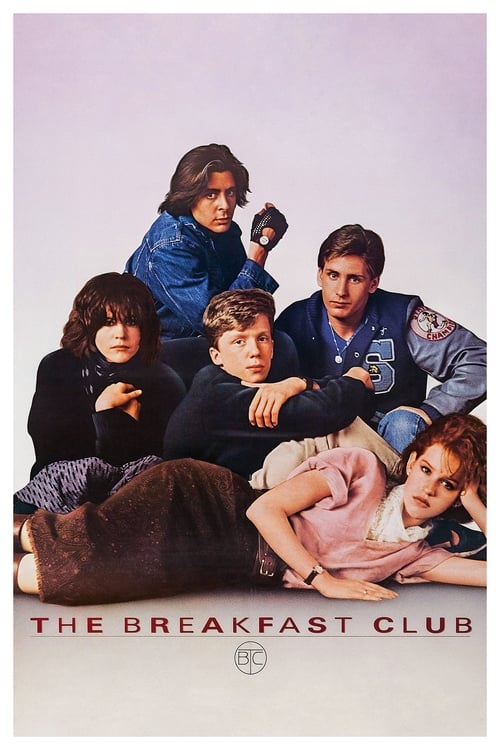
The Breakfast Club
Plot
Five high school students from different walks of life endure a Saturday detention under a power-hungry principal. The disparate group includes rebel John, princess Claire, outcast Allison, brainy Brian and Andrew, the jock. Each has a chance to tell his or her story, making the others see them a little differently -- and when the day ends, they question whether school will ever be the same.
Get the Weekly Woke Watchlist
New and trending movies scored for woke bias, preachy messaging, and forced political themes — before you waste your evening.
No spam. One useful email per week.
Overall Series Review
Categorical Breakdown
The narrative centers on class and high school social hierarchy (rich vs. poor, popular vs. outcast), not race or immutable characteristics in the modern intersectional sense. The five main characters are all white, and the casting is historically authentic to its suburban 1985 setting without any forced insertion of diversity. The core message is a universal meritocracy where character is found beneath the social labels.
The film's hostility is directed purely at the local institutions of the high school and the specific, dysfunctional nuclear families of the main characters. Vice Principal Vernon is presented as the villainous, incompetent authority figure, while all five parents are shown to be neglectful or abusive. This is a critique of localized adult hypocrisy and parental failure, not a broad deconstruction or self-hatred of 'Western civilization' or its ancestors.
The movie does not feature the 'Girl Boss' trope, and the female characters are presented in traditionally complex, often vulnerable ways. Princess Claire is not a perfect, instantly powerful lead. The film is retrospectively criticized for showcasing blatant sexism and misogynistic dialogue from John Bender toward Claire, including a scene that implies sexual harassment, which is an example of traditional gender dynamics that the 'woke' narrative explicitly opposes. The makeover given to Allison reinforces traditional beauty standards for male validation.
No characters are openly gay, bisexual, or transgender, and the narrative contains no elements of queer theory or gender ideology lecturing. The romantic pairings that form are entirely heterosexual, which establishes a normative structure. The film does feature homophobic slurs in the dialogue, reflecting the period's teen slang, but this is a portrayal of bigotry, not the centering of alternative sexualities.
There are no significant references to religion or God in the entire film, either as a source of strength or as a source of evil. The characters' moral reckoning is entirely secular and psychological, focusing on self-discovery and the subjective definition of identity. The movie occupies a neutral space by having a purely humanistic moral foundation without directly attacking or embracing traditional faith.
Get the Weekly Woke Watchlist
New and trending movies scored for woke bias, preachy messaging, and forced political themes — before you waste your evening.
No spam. One useful email per week.