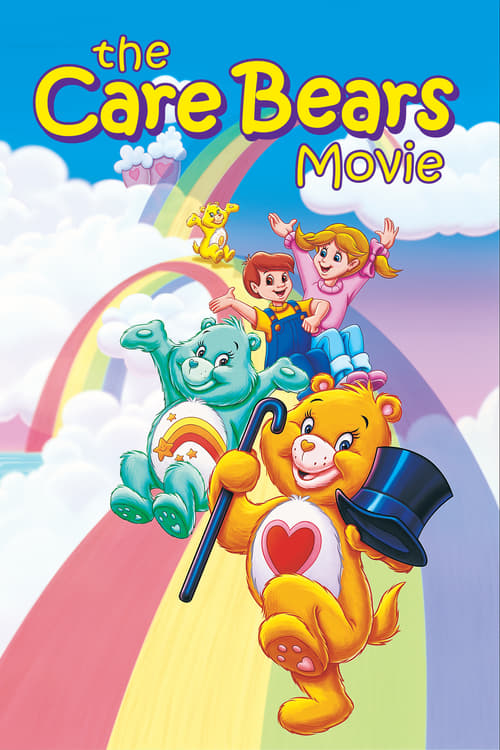
The Care Bears Movie
Plot
The Care Bears team up with a troubled brother and sister who just moved to a new town to help a neglected young magician's apprentice whose evil spell book causes sinister things to happen.
Get the Weekly Woke Watchlist
New and trending movies scored for woke bias, preachy messaging, and forced political themes — before you waste your evening.
No spam. One useful email per week.
Overall Series Review
Categorical Breakdown
The narrative is a universal meritocracy of emotion, focusing entirely on the internal state of loneliness and cynicism as the corrupting force, not on race or immutable characteristics. The characters are human children and anthropomorphic bears, none of whom are used to lecture on privilege or intersectional hierarchy. The villain is a disembodied evil spirit exploiting a neglected boy, Nicholas, whose redemption is based purely on the content of his soul being restored by friendship.
The Care Bears' home, Care-a-Lot, is presented as a utopian civilization (built on clouds and caring) that is worthy of protection, which is the opposite of self-hatred. The objective is to restore 'caring' to the human world (Earth), not to frame Western civilization or one's home as fundamentally corrupt. The forces of chaos are an external, magical Evil Spirit, not an internal social structure or ancestor.
Gender roles are largely traditional but cooperative. The primary human protagonists are a brother and sister duo who must work together to find emotional stability. One critic noted that the girl's ambition is to be a nurse and the boy's to be a jet pilot, which is an echo of 'past patterns' rather than a deconstruction of gender norms. The female characters are not portrayed as 'Girl Boss' archetypes, nor is there any anti-natalist or anti-family messaging; the entire plot is motivated by the children's need for community and belonging after losing their parents.
The movie is solely focused on the concept of 'caring' and 'friendship' for a very young audience. There is no representation, subtext, or lecturing on sexual identity, alternative sexualities, or gender ideology. The nuclear family is not deconstructed; rather, the plot highlights the pain of its loss and the need for a compensatory, normative social structure (friendship/community).
The movie promotes a clear, transcendent moral law where 'caring' is an objective, universal virtue and 'uncaring' is a malevolent, magical evil. The antagonist is explicitly an 'Evil Spirit' who seeks to destroy goodness. This dualistic structure, centered on a non-subjective moral good, affirms an Objective Truth and a higher moral order, which is the opposite of moral relativism and anti-theism, although its moral source is secular ('caring') rather than overtly Christian.
Get the Weekly Woke Watchlist
New and trending movies scored for woke bias, preachy messaging, and forced political themes — before you waste your evening.
No spam. One useful email per week.