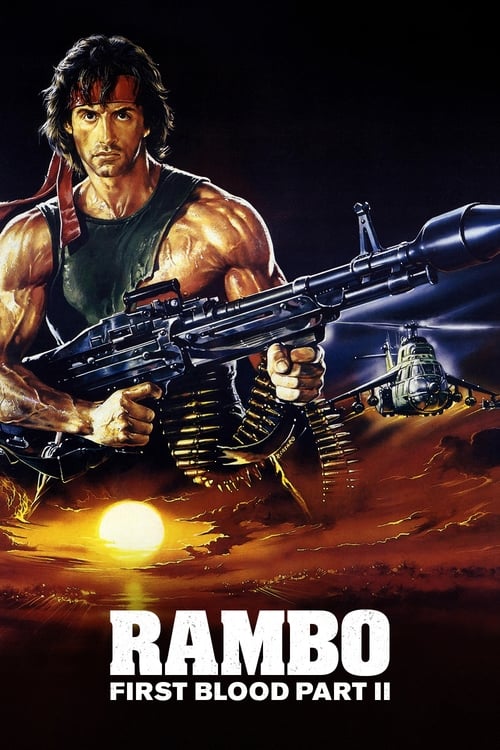
Rambo: First Blood Part II
Plot
John Rambo is released from prison by the government for a top-secret covert mission to the last place on Earth he'd want to return - the jungles of Vietnam.
Get the Weekly Woke Watchlist
New and trending movies scored for woke bias, preachy messaging, and forced political themes — before you waste your evening.
No spam. One useful email per week.
Overall Series Review
Categorical Breakdown
Characters are judged entirely on their moral and tactical competence; Rambo is the quintessential white male action hero whose individual merit surpasses all bureaucracy. The main villain is a white American bureaucrat, Marshall Murdock, demonstrating that evil is not based on race but on corruption and lack of character. The non-white enemies are villains in a geopolitical conflict, not based on race theory. The narrative champions the traditional soldier.
The film does not engage in civilizational self-hatred. It directs hostility toward corrupt American government officials who betray the nation's soldiers, but Rambo's entire mission is an act of extreme loyalty, gratitude, and defense of his fellow countrymen (the POWs). Rambo acts as the institutional shield against the chaos created by the faithless political class, ultimately striving to restore national honor.
The main female character, Co Bao, is a capable intelligence agent who helps Rambo. She is explicitly positioned in a heterosexual, complementary relationship with Rambo, with plans to marry and start a life in America. Her death serves to motivate the male hero's vengeance, and Rambo himself is portrayed as an idealized, hyper-masculine figure, establishing a clear complementary gender dynamic.
The film maintains a normative structure, centered on a traditional male-female pairing between Rambo and Co Bao. There is no presence of alternative sexual ideologies, centering of non-heterosexual identities, or any discussion of gender theory. Sexuality remains a private, non-political element of the main relationship.
Religion is a minor element, only appearing when Co Bao explains her Buddha necklace is for good luck. The core conflict is political and military (Capitalism/Individualism versus Communism/Tyranny), not a lecture against traditional religion. Faith is not a central theme, but the concept of Objective Truth (doing the right thing and rescuing the POWs) drives the hero's moral imperative against the moral relativism of the treacherous politician Murdock.
Get the Weekly Woke Watchlist
New and trending movies scored for woke bias, preachy messaging, and forced political themes — before you waste your evening.
No spam. One useful email per week.