Secret Weapons
Plot
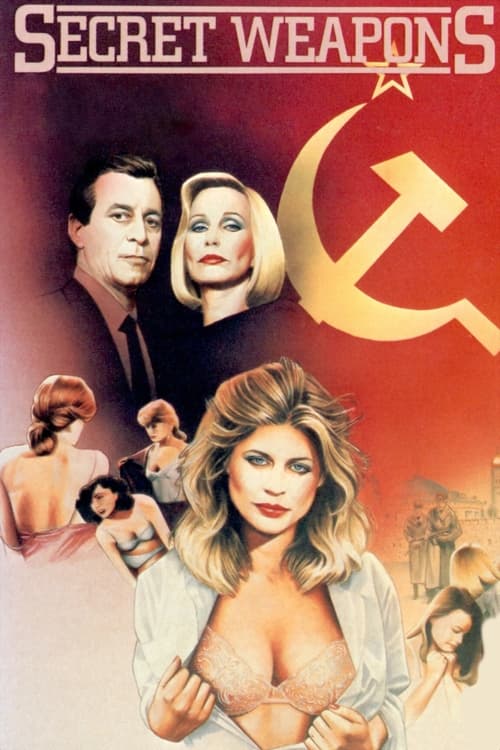
Soviet High School girls are sent to the U.S. where they are taught to become secret agents and use sex to find information.
Get the Weekly Woke Watchlist
New and trending movies scored for woke bias, preachy messaging, and forced political themes — before you waste your evening.
No spam. One useful email per week.
Overall Series Review
Categorical Breakdown
The narrative's central division is based on political ideology (Soviet Communism vs. Western freedom) during the Cold War. Character value is determined by their moral actions within this ideological struggle, such as the protagonist's decision to defect, rather than by race or immutable characteristics. There is no evidence of vilification of 'whiteness,' forced diversity, or a focus on systemic oppression in the modern intersectional sense.
The entire premise is a critique of a hostile, foreign civilization—the Soviet Union—which is depicted as fundamentally corrupt and manipulative for forcing young women into sex slavery for espionage. The protagonist's ultimate moral choice is to reject her home culture's corrupt system and seek freedom and love in the West, affirming Western values as a superior alternative and a source of refuge. Institutions like individual liberty and conscience are presented as positive goods.
The female characters are central to the plot as trained secret agents who use sex as a weapon. This gives them a form of transactional agency but is ultimately a portrayal of sexual exploitation enforced by the communist regime, not female empowerment. The female lead's ultimate moral and emotional arc is driven by falling in love with a man and choosing personal connection and defection, which undercuts the 'Girl Boss' trope. The plot shows the Soviet system abusing women, not celebrating a feminine path to career fulfillment.
The core of the espionage plot revolves around traditional male-female seduction for blackmail purposes. All core relationships, including the central romance that drives the protagonist's defection, are heterosexual. The movie contains no elements of alternative sexualities being centered, deconstruction of the nuclear family, or instruction on gender ideology.
The conflict is framed as ideological, contrasting the Soviet system with the American way of life. Dialogue explicitly contrasts the Soviet constitutional guarantees (material goods) with the US system that acknowledges men are 'endowed by their creator' with inalienable rights. The villainous Soviet system is portrayed as amoral and materialistic, implying the transcendent moral framework of the West is superior. Faith itself is not vilified; rather, the materialist, amoral state is the source of evil.
Get the Weekly Woke Watchlist
New and trending movies scored for woke bias, preachy messaging, and forced political themes — before you waste your evening.
No spam. One useful email per week.