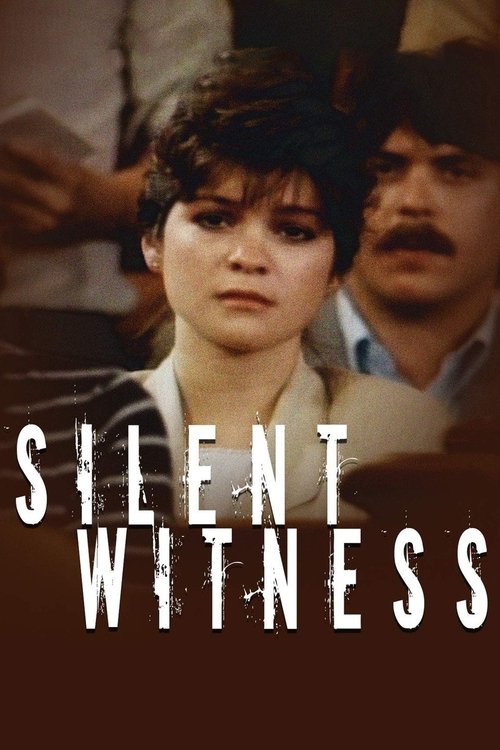
Silent Witness
Plot
The marriage of a young working-class woman is jeopardized when she witnesses her brother-in-law's participation in a gang rape of an intoxicated woman in a neighborhood bar.
Get the Weekly Woke Watchlist
New and trending movies scored for woke bias, preachy messaging, and forced political themes — before you waste your evening.
No spam. One useful email per week.
Overall Series Review
Categorical Breakdown
The characters are defined by a classic moral dilemma and their class, being a working-class couple in Pittsburgh. The rapists and the protagonist belong to the same ethnic and socio-economic group (a close-knit Irish family). Character merit and moral choice drive the entire plot, not immutable characteristics or intersectional hierarchy. No forced insertion of diversity or vilification of whiteness exists.
The narrative focuses on a critique of a specific moral failure within a single family unit: the willingness to protect a criminal relative at the expense of justice. The protagonist's final choice to testify upholds the rule of law and an objective moral standard, portraying Western institutional values as shields against chaos rather than a source of corruption.
The core of the movie centers on the female protagonist, Anna, as the sole moral agent brave enough to defy a patriarchal, male-driven family structure that attempts to protect 'the boys' from the consequences of a violent crime. The men in her husband's family are depicted as corrupt or weak in their attempts to enforce a 'code of silence.' However, Anna is a newlywed whose life goal is stated as having a happy life and starting a family, avoiding the 'career is the only fulfillment' trope. The emphasis on female moral courage against a corrupt male system drives the score up.
The movie contains no elements of sexual ideology, alternative sexualities, or gender theory. The central family unit is the traditional nuclear family, which the crime threatens to deconstruct due to the moral crisis, not due to an ideological agenda.
The conflict is purely ethical and moral, forcing the protagonist to choose between family loyalty and objective truth (justice). The plot champions a transcendent morality where a horrific act is definitively wrong, and the truth must be told regardless of the personal cost. Faith and traditional religion are not explicit themes, but the moral structure firmly rejects subjectivism and moral relativism.
Get the Weekly Woke Watchlist
New and trending movies scored for woke bias, preachy messaging, and forced political themes — before you waste your evening.
No spam. One useful email per week.