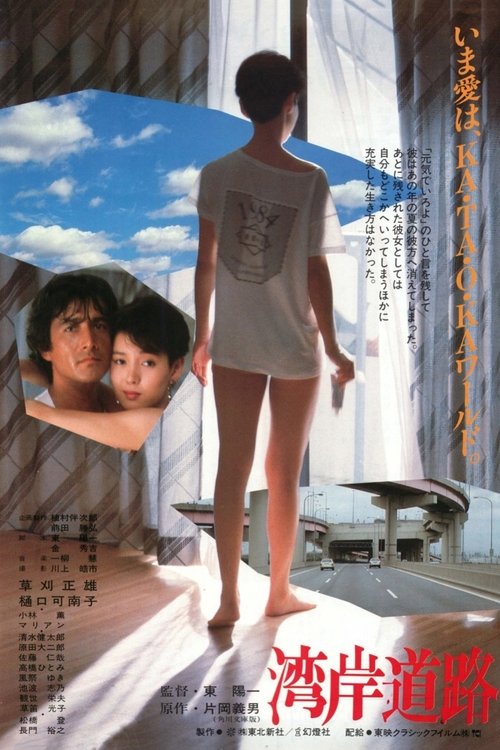
The Wangan Highway
Plot
Based on the novel of the same name by Yoshio Kataoka.
Get the Weekly Woke Watchlist
New and trending movies scored for woke bias, preachy messaging, and forced political themes — before you waste your evening.
No spam. One useful email per week.
Overall Series Review
Categorical Breakdown
The movie is a Japanese production with a purely Japanese cast, focusing on internal Japanese social and marital dynamics. No vilification of 'whiteness,' race-swapping, or intersectional hierarchy is present. The drama is based on personal choices and merit (or lack thereof), not immutable characteristics.
The film challenges the traditional Japanese institution of marriage and family by presenting a 'nonconformist' and radically open relationship dynamic that ultimately dissolves. This deconstruction is a critique of modern societal norms rather than a demonization of Japan's history or ancestors. The ultimate motorcycle trip by the wife is a search for personal freedom, not a lecture on fundamental civilizational corruption.
The core of the plot is the 'new woman' theme. The female lead, Fumiko, is self-supporting, makes her own autonomous decisions about her sex life and career, and embarks on a solo, self-fulfilling journey on a motorcycle. This elevates the 'Girl Boss' and anti-natalism score, as career and independent quest supersede motherhood or marital complementarianism. The male protagonist is passively non-committal, allowing the marriage to deconstruct entirely.
The narrative centers on a heterosexual relationship, but its primary function is to deconstruct the traditional nuclear family/marital structure through the practice of an 'open marriage' and eventual abandonment of the pair bond. This acts as a rejection of the 'Normative Structure' of the family unit, but it does not center alternative sexual identities, gender ideology, or transitioning.
The movie's themes are entirely secular, focusing on personal freedom, love, sex, and independence. There is no depiction of or hostility toward any religion, nor are there any explicitly transcendent moral claims made. Morality is purely subjective and relational.
Get the Weekly Woke Watchlist
New and trending movies scored for woke bias, preachy messaging, and forced political themes — before you waste your evening.
No spam. One useful email per week.