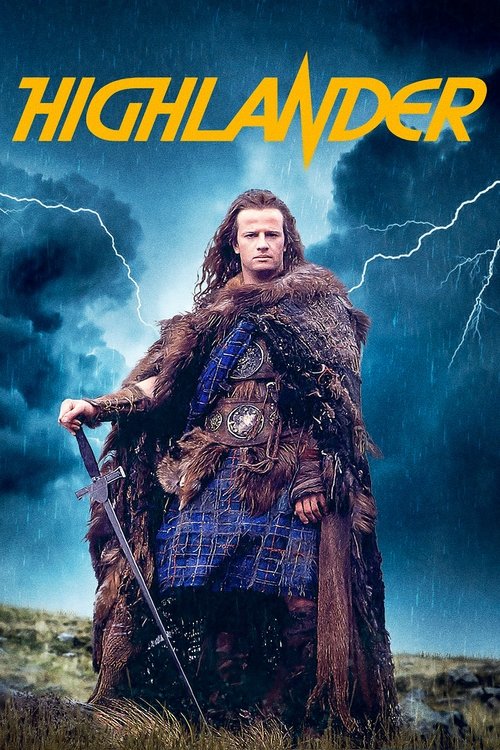
Highlander
Plot
He fought his first battle on the Scottish Highlands in 1536. He will fight his greatest battle on the streets of New York City in 1986. His name is Connor MacLeod. He is immortal.
Get the Weekly Woke Watchlist
New and trending movies scored for woke bias, preachy messaging, and forced political themes — before you waste your evening.
No spam. One useful email per week.
Overall Series Review
Categorical Breakdown
The conflict is based entirely on the universal trait of immortality and mastery of sword-fighting, focusing on character merit and skill. The casting is notoriously arbitrary and 'colorblind,' featuring a Frenchman as a Scot and a Scotsman as an Egyptian Spaniard, demonstrating a complete disregard for historical authenticity or intersectional hierarchy in favor of star power. The villain is a white male, but the hero is also a white male, indicating that good and evil are determined by individual action, not immutable characteristics.
The Scottish Highlands are celebrated as the hero's spiritual home and the source of his identity. The film honors the sacrifices of the hero's mortal life, such as his first marriage and his exile, with a tone of melancholy respect. Core Western institutions like the nuclear family are the hero's ultimate desire and reward, as the goal of winning the Prize is to become a mortal man who can finally have children. There is no narrative condemnation of Western civilization.
The main female character, Brenda Wyatt, is initially portrayed as an intelligent, skilled forensic metallurgist and police investigator actively pursuing the mystery. However, her character arc ultimately transitions into the role of the damsel in distress who is kidnapped to draw out the male hero for the final battle. The film also clearly validates the importance of marriage and the desire for children, making the hero's motivation to become mortal to start a family a key plot point. The masculinity displayed by the heroes is framed as protective and honorable.
The narrative centers entirely on traditional, male-female pairings and the struggle of the hero to find lasting heterosexual love and family across centuries. The central family unit (Connor, his first wife Heather, and his goal to have children with Brenda) is the standard and desired structure of the protagonist. Sexuality is presented as private, with no ideological discussion or centering of alternative sexualities or gender theory.
The film explicitly establishes that Immortals are forbidden from fighting on 'Holy Ground,' an objective moral and physical law that governs the entire game, which even the nihilistic villain respects until a critical scene. The hero is shown practicing a personal, reverent ritual by lighting a candle in a church for his late wife. Faith is not presented as a source of evil, and the ultimate 'Prize' that the hero wins gives him a transcendent ability aimed at encouraging 'co-operation, understanding, and peace among humanity,' confirming a belief in an objective moral good.
Get the Weekly Woke Watchlist
New and trending movies scored for woke bias, preachy messaging, and forced political themes — before you waste your evening.
No spam. One useful email per week.