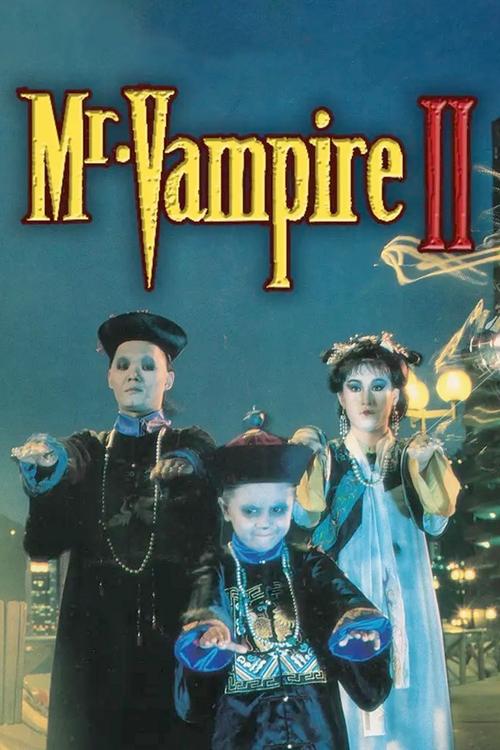
Mr. Vampire II
Plot
Chaos ensues after a team of archaeologists accidentally breaks the seals of a sleeping vampire family, which prevent them from waking up.
Get the Weekly Woke Watchlist
New and trending movies scored for woke bias, preachy messaging, and forced political themes — before you waste your evening.
No spam. One useful email per week.
Overall Series Review
Categorical Breakdown
Characters are judged by competence or incompetence; the central conflict pits a greedy, reckless modern Chinese archaeologist against a capable, moral traditional Chinese Taoist master. The casting is entirely East Asian and historically authentic to its Hong Kong setting, focusing on merit and skill over immutable characteristics. There is no vilification of 'whiteness' or forced diversity.
The narrative does not portray the home culture as fundamentally corrupt; it critiques modern *greed* and *incompetence* through the figure of the archaeologist. The institution of traditional Taoism and its spiritual methods is consistently portrayed as the only effective shield against the chaos unleashed from the ancestral past. The ancestral monsters are a threat, but the wisdom to defeat them comes from preserved Chinese heritage and spirituality.
Gender roles are largely traditional, centering on a father, his daughter, and her prospective son-in-law, a standard male-female pairing. One scene features a brief comedic discussion between a father and son about single parenting and 'mixed-up gender roles' that acknowledges shifting family dynamics without building a 'Girl Boss' or anti-natalist narrative. The female characters are not depicted as instant, perfect 'Mary Sues,' nor are all males bumbling idiots.
The core structure is normative, featuring a traditional male-female pairing and a storyline centered on a modern family unit. The film operates within a traditional framework and contains no centering of alternative sexualities, no deconstruction of the nuclear family as an ideology, and no focus on gender theory or transitioning.
Traditional Chinese spiritual faith, specifically Taoist practices and talismans, is the singular source of strength required to contain and defeat the supernatural evil. The film frames this faith and its accompanying rituals as the objective moral and physical law governing the conflict, directly acknowledging and celebrating a transcendent morality over a spiritual vacuum.
Get the Weekly Woke Watchlist
New and trending movies scored for woke bias, preachy messaging, and forced political themes — before you waste your evening.
No spam. One useful email per week.