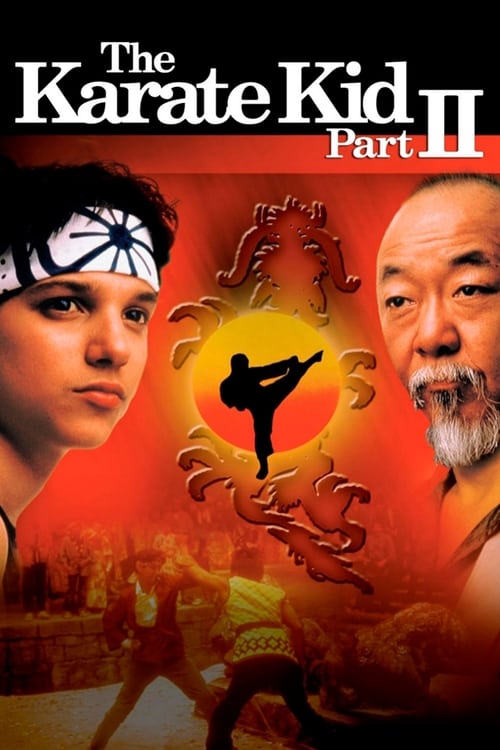
The Karate Kid Part II
Plot
Summoned by his dying father, Miyagi returns to his homeland of Okinawa, with Daniel, after a 40-year exile. There he must confront Yukie, the love of his youth, and Sato, his former best friend turned vengeful rival. Sato is bent on a fight to the death, even if it means the destruction of their village. Daniel finds his own love in Yukia's niece, Kumiko, and his own enemy in Sato's nephew, the vicious Chozen. Now, far away from the tournaments, cheering crowds and safety of home, Daniel will face his greatest challenge ever when the cost of honor is life itself.
Get the Weekly Woke Watchlist
New and trending movies scored for woke bias, preachy messaging, and forced political themes — before you waste your evening.
No spam. One useful email per week.
Overall Series Review
Categorical Breakdown
The film centers on an internal conflict within the Okinawan community, defined by an old love triangle, personal honor, and a generational divide between tradition (Miyagi) and greedy industrialism (Sato and Chozen). Antagonists are of Okinawan descent, not white males. Daniel, the white male protagonist, is portrayed as a respectful outsider who willingly immerses himself in the culture and learns from his Asian mentor. Characters are judged solely on their merit, honor, and moral choices, not on immutable characteristics or a lecture on privilege. Casting is culturally authentic, fitting the Okinawan setting.
The narrative holds up the core Western/American character, Daniel, as a force for good, a respectful student, and a guest who helps the local community. The Western 'home culture' is not framed as corrupt or racist; it is merely the place from which Daniel and Miyagi depart. The conflict is internal to the Okinawan setting, pitting the traditional, familial way of life (represented by Miyagi and the villagers) against a form of ruthless industrial capitalism embraced by the antagonist Sato. The film is a celebration of Okinawan culture, not a demonization of the West. Daniel's role is to help preserve the traditions of the village.
Female characters, Yukie and Kumiko, are depicted as romantic interests and cultural anchors. Yukie is shown to be devoted to Miyagi, never marrying her arranged fiancé Sato because of her true love. Kumiko is an aspiring dancer who teaches Daniel about Okinawan culture. Neither woman is depicted as a 'Girl Boss' or flawless 'Mary Sue' but rather as a source of emotional connection and cultural education. The dynamic between Daniel and Kumiko follows a traditional protective masculinity pattern during moments of crisis. The film is pro-romance and pro-community with no anti-natalist themes.
The core relationships of the story are traditional male-female pairings (Miyagi and Yukie; Daniel and Kumiko). Sexuality and gender identity are not a thematic element of the film. The focus is exclusively on normative male-female pairing and a stable, mentor-student bond, with no ideological discussion or centering of alternative sexualities or gender theories.
The film's moral framework is explicitly transcendent, focusing on the virtues of honor, forgiveness, mercy, and discipline as a 'higher moral law'. Miyagi's philosophy is rooted in traditional, non-violent spiritual wisdom that contrasts with the violent, unforgiving code of his rival. The theme is one of spiritual strength through peace and character, which serves as a source of strength against chaos. There is no depiction of traditional religion as a source of evil or villainy.
Get the Weekly Woke Watchlist
New and trending movies scored for woke bias, preachy messaging, and forced political themes — before you waste your evening.
No spam. One useful email per week.