Opposing Force
Plot
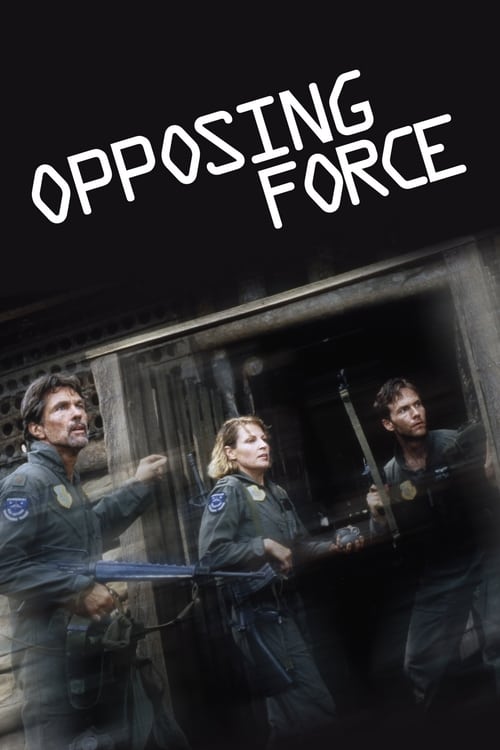
A group of elite soldiers, including one woman, sign up for the ultimate training mission. The group parachutes onto a remote island, where their objective is to reach the safety zone before the "opposing force" captures them. Everything does not go as expected, and the training mission turns into the real thing.
Get the Weekly Woke Watchlist
New and trending movies scored for woke bias, preachy messaging, and forced political themes — before you waste your evening.
No spam. One useful email per week.
Overall Series Review
Categorical Breakdown
The conflict is based on a rogue commander's sadism, not on race or group identity. The torturers, who make up the 'opposing force,' include a white commander (Becker) and a black second-in-command (Stafford), which prevents the villainy from being unilaterally pinned on 'whiteness.' Characters are judged by their roles in the military structure and their reaction to immorality, aligning with a universal meritocracy of survival.
The narrative's primary critique is directed at the failure of a specific, internal military institution and the insanity of a commanding officer, Becker, rather than a broad indictment of Western civilization. The heroic characters, led by Logan, revolt to impose justice against the institutional corruption, indicating a faith in a moral standard rather than civilizational self-hatred. It is a critique of a broken shield, not the nation itself.
Casey is presented as the 'first' female soldier in the elite unit, establishing a trailblazer/diversity character whose inclusion serves as a central plot point. The entire violent revolt is triggered by her sexual assault at the hands of the male commander, which centers her gender and victimhood as the primary source of the conflict. While she is the sole survivor who 'qualifies,' the ensuing 'rambo' action that takes out the enemy force is primarily driven by the male lead, Logan, after the assault occurs.
The movie operates within a conventional action/exploitation genre framework. There is no presence of alternative sexualities, gender ideology, or a critique of the nuclear family. The sexual element is strictly a non-consensual act of power that serves as a plot device to escalate the violence, adhering to a normative structure by focusing on the male-female power dynamic in a conventional, brutal way.
Religion, faith, and the church are entirely absent from the plot and character motivations. The moral framework is simple and objective: torture and sexual violence are unequivocally evil crimes that the protagonists must fight against. The film’s focus on absolute moral wrongs and the fight for justice does not suggest an embrace of moral relativism or hostility toward any specific religious tradition.
Get the Weekly Woke Watchlist
New and trending movies scored for woke bias, preachy messaging, and forced political themes — before you waste your evening.
No spam. One useful email per week.