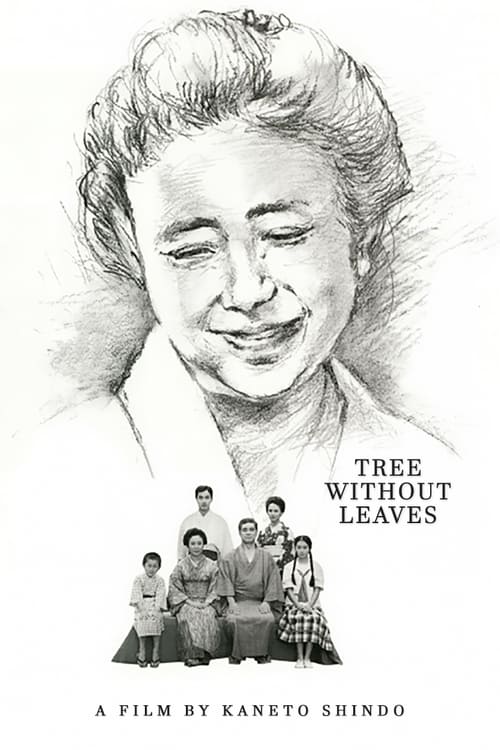
Tree Without Leaves
Plot
Haru, an aging scriptwriter, has isolated himself somewhere in the woods of Nagano to work on his first novel. As the last surviving member of his kin, he intends to chronicle the family he grew up in.
Get the Weekly Woke Watchlist
New and trending movies scored for woke bias, preachy messaging, and forced political themes — before you waste your evening.
No spam. One useful email per week.
Overall Series Review
Categorical Breakdown
The film is a Japanese production set in Japan, and all casting is ethnically authentic to the time and place. The narrative focuses entirely on a specific family's class-based financial ruin, the characters' moral choices, and the psychological effects of family dynamics. Character worth is judged solely by their actions and inner struggles, embodying a principle of universal meritocracy within the context of family survival.
The film displays gratitude and deep reverence for the family’s ancestral past and home, which is literally dismantled before their eyes due to debt. The tone is mournful and nostalgic for a lost traditional life, not hostile toward the culture itself. Criticism is directed at the passive patriarch's individual failure and the cold realities of the post-war economy, not at the fundamental morality of Japanese civilization or its ancestors.
The mother is depicted as the protective, emotionally vital center of the family who makes great personal sacrifices to keep the family intact. In contrast, the father is consistently shown as passive, incapable, and ultimately responsible for the family’s ruin, presenting a clear emasculation of the male figure. The focus is not on 'Girl Boss' careerism, but the mother's overwhelming dedication, which, while celebratory of her strength, leads to the main character's adult inability to form proper relationships (a psychological 'mother complex'), suggesting an unintended anti-family outcome for the male lead.
The narrative is a traditional, realist family drama focused on the nuclear family structure and its eventual dissolution. There is no presence of alternative sexual ideologies, gender theory, or centering of LGBTQ+ themes. Sexuality is a private and background element of the adult life shown in the film.
The core conflict is financial and psychological, not spiritual or religious. The film focuses on memory, family lineage, and personal moral choices without any reference to organized religion, anti-theist arguments, or the deconstruction of an objective moral law. Morality is framed by the family's internal, traditional values and the need for personal accountability.
Get the Weekly Woke Watchlist
New and trending movies scored for woke bias, preachy messaging, and forced political themes — before you waste your evening.
No spam. One useful email per week.