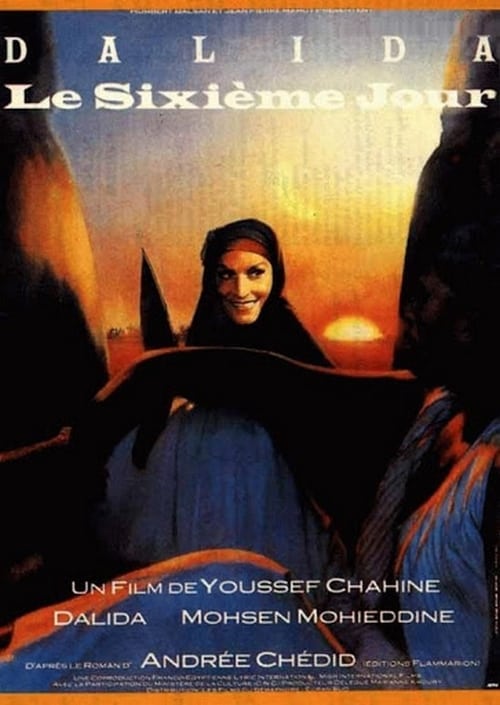
The Sixth Day
Plot
Egypt, 1947: in the midst of a cholera outbreak. A washerwoman tries to take care of her family, while at the same time resisting the advances of a charming suitor who's half her age.
Get the Weekly Woke Watchlist
New and trending movies scored for woke bias, preachy messaging, and forced political themes — before you waste your evening.
No spam. One useful email per week.
Overall Series Review
Categorical Breakdown
The narrative centers on the struggle of the poor, unprivileged class against systemic failure and corruption, framing the disease as a metaphor for the ailing post-colonial state. Vilification is directed at colonial powers (the British) and the domestic ruling class that neglects the poor. The core conflict is between the oppressed and the oppressors. However, the conflict is not based on 'race' or 'whiteness' as understood in the modern intersectional lens, but on economic class and political power dynamics. The non-ethnically-authentic casting of the lead actress (Dalida) is a form of colorblind or cross-cultural casting that does not serve a political lecture.
Hostility is directed specifically at the foreign colonial past and the incompetence/corruption of the ruling authorities, not at Egyptian civilization, heritage, or ancestors. The common Egyptian people and their familial bonds, represented by the protagonist's fierce devotion to her grandson, are treated with dignity and compassion, serving as a shield against chaos. The film critiques the system that fails the home, not the home itself.
The score is elevated due to the explicit centering of female desire and 'self-actualization' in a narrative where the protagonist is an unhappy, working-class wife. The washerwoman, Seddika, is the sole, strong-willed agent of the plot, deciding her family's fate and initiating a transgressive, age-gap relationship with a younger suitor. This narrative focus on a woman's emotional and physical independence, separate from her husband (who is portrayed as paralyzed and passive), moves away from a complementarian or traditionally natalist framework, even though her primary action is saving her grandson.
The film focuses entirely on normative heterosexual relationships, albeit an age-mismatched and extramarital pairing. Sexual identity is treated as a private matter that forms part of the personal drama, not as a political ideology. The structure of the nuclear family, though challenged by poverty and infidelity, is the default framework; it is not explicitly deconstructed or framed as 'oppressive.'
The conflict is primarily existential, centered on a life-or-death timeline tied to a common belief about the cholera illness. The film focuses on the individual's futile battle against fate and mortality. There are no explicit attacks on traditional religion (specifically Christianity/Islam) or religious figures. Faith is not presented as a source of strength, but neither is it a source of evil, resulting in a neutral score leaning low.
Get the Weekly Woke Watchlist
New and trending movies scored for woke bias, preachy messaging, and forced political themes — before you waste your evening.
No spam. One useful email per week.