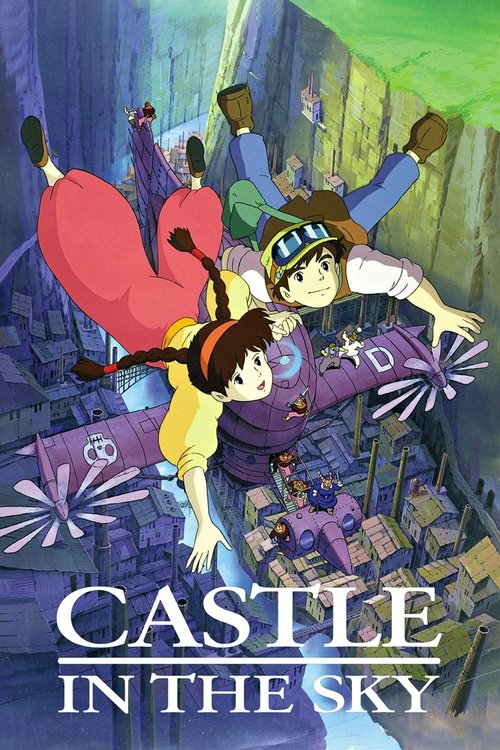
Castle in the Sky
Plot
A young boy and a girl with a magic crystal must race against pirates and foreign agents in a search for a legendary floating castle.
Get the Weekly Woke Watchlist
New and trending movies scored for woke bias, preachy messaging, and forced political themes — before you waste your evening.
No spam. One useful email per week.
Overall Series Review
Categorical Breakdown
Characters are judged solely by their personality and choices, such as Pazu’s courage, Sheeta’s kindness, and Muska’s ambition. The narrative is an adventure based on class and a power struggle over technology, not on race or intersectional hierarchy.
The story critiques overly powerful and technologically advanced societies, suggesting they are inherently unstable and prone to self-destruction. The antagonist seeks to misuse the ancient city’s power for global domination. This promotes an environmentalist and anti-war message, but the home community is depicted warmly, and the critique is aimed at corrupting power, not core ancestors or civilization itself.
Sheeta is a balanced heroine who is intelligent, kind, and grows to become resolute and active. Pazu is an equally heroic, protective, and energetic male protagonist. The female pirate captain, Dola, is a formidable, autonomous woman who also acts as a positive mother figure, showing a respect for a traditional family role within a non-traditional context.
The narrative is centered on the developing, complementary, and conventional bond between the two male and female protagonists. There is no content or thematic messaging related to alternative sexualities, gender ideology, or the deconstruction of the nuclear family.
The core of the movie revolves around the objective moral choice to reject godlike technological power for the sake of humanity and nature. The villain’s desire for omnipotence is presented as unambiguous evil. The film champions transcendent morality in the form of humility, peace, and ethical responsibility.
Get the Weekly Woke Watchlist
New and trending movies scored for woke bias, preachy messaging, and forced political themes — before you waste your evening.
No spam. One useful email per week.