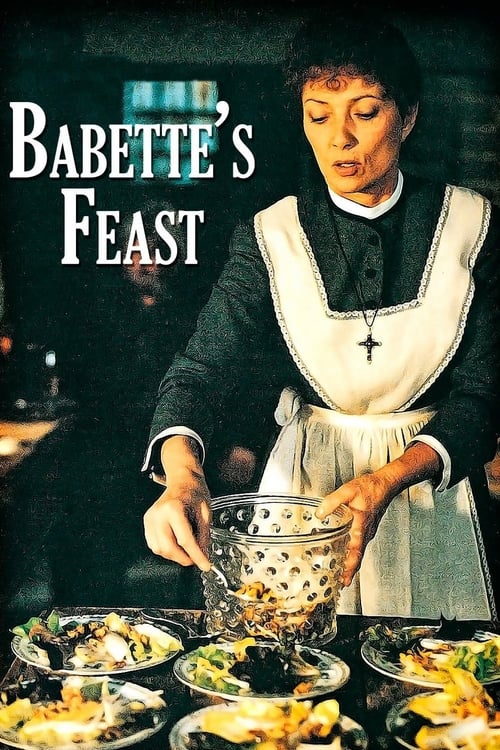
Babette's Feast
Plot
A French housekeeper with a mysterious past brings quiet revolution in the form of one exquisite meal to a circle of starkly pious villagers in late 19th century Denmark.
Get the Weekly Woke Watchlist
New and trending movies scored for woke bias, preachy messaging, and forced political themes — before you waste your evening.
No spam. One useful email per week.
Overall Series Review
Categorical Breakdown
Characters are judged strictly by the content of their soul, their artistry, and their character merit. The conflict is a classic one between two Western cultural/religious traditions (Danish Lutheran austerity versus French Catholic artistic expression). All main characters are from the same ethnic and racial background. There is no focus on immutable characteristics, intersectional hierarchy, or forced diversity.
The film does not promote civilizational self-hatred but instead offers a constructive critique of an overly ascetic, pleasure-shunning Christian sect within the Danish home culture. The strict communal life is shown to have degenerated into bickering and spiritual decay. The foreign culture (French culinary art) is the vehicle for a positive, spiritual, and communal renewal, which ultimately brings the home culture back to its foundational principles of love and charity. This is a targeted critique of Puritanism, not a blanket demonization of the nation or its heritage.
The core of the story revolves around three self-possessed, capable women: the two pious sisters and the French master chef. Babette is a consummate artist, but her brilliance is channeled into an act of sacrificial love, not self-aggrandizement or 'Girl Boss' ambition. The sisters' choice to renounce marriage and career for spiritual service is honored as a path to fulfillment, which contrasts with the male suitors who pursued worldly careers and found them to be hollow and a source of regret. The message celebrates vocation and sacrifice, not anti-natalism or male emasculation.
The story is set in a 19th-century context where the standard structure is the traditional male-female pairing or the renunciation of it for a pious life. Sexuality is either renounced or a private matter that occurred off-screen. No alternative sexualities are centered, and there is no discussion or critique of gender ideology.
The film is deeply religious, steeped in Christian symbolism (sacrifice, grace, the Eucharist, Christ-figure). It critiques a form of faith (strict Pietism) that rejects the sensual world and has led to bitterness among the faithful. However, it affirms a higher, transcendent moral law and spiritual reality, showing that true faith and love are found through a sacramental engagement with the created world. Faith is the central source of strength and meaning for all the main characters.
Get the Weekly Woke Watchlist
New and trending movies scored for woke bias, preachy messaging, and forced political themes — before you waste your evening.
No spam. One useful email per week.