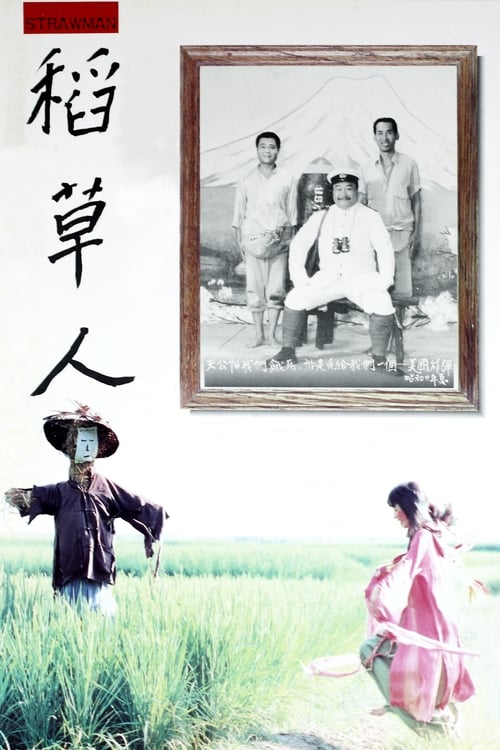
Strawman
Plot
In 1940s Taiwan, during the last days of Japanese rule, an impoverished farming village is less concerned with colonial politics than with feeding their families. One day, an American bomb falls onto a field, where it lies unexploded.
Get the Weekly Woke Watchlist
New and trending movies scored for woke bias, preachy messaging, and forced political themes — before you waste your evening.
No spam. One useful email per week.
Overall Series Review
Categorical Breakdown
The film centers on the specific, historically authentic plight of ethnic Taiwanese tenant farmers under Japanese colonial rule. The conflict is based on colonial oppression and economic class disparity, not on Western identity politics or intersectional hierarchy. Character merit is defined by the brothers’ simple resourcefulness and their family’s resilience in the face of poverty and war. There is no 'race-swapping' or vilification of 'whiteness'; the antagonists are the Japanese colonial administrators and the distant American bombers.
The film belongs to the 'nativist trilogy' of Taiwanese cinema, which explicitly works to preserve and explore local Taiwanese history and cultural memory. The narrative’s focus is on the survival of the village and the family, which views their home culture as the core unit of resistance and identity against foreign/imperial influence. The critique is aimed at the external powers and authorities (Japanese and post-war American/KMT) who oppress or ignore the local people, not at the Taiwanese civilization itself. Gratitude for the home culture and respect for ancestors' sacrifices are central themes.
The main male characters, the two brothers, are depicted as 'oafish' and 'clownish' simpletons whose attempts at reward are bumbling, which aligns slightly with the emasculation trope. However, the film celebrates the protective strength of the mother, who uses a clever but crude method (smearing dung on their eyes) to ensure her sons evade conscription. Another female character, the sister, is a tragic figure, driven mad by the loss of her conscripted husband, highlighting the toll of war on women. The family is large and motherhood is presented as a vital, protective force focused on survival, not a 'prison.'
The narrative is set within the confines of a traditional, impoverished 1940s Taiwanese farming village. The central relationships are those of a nuclear/extended family—mother, sons, sister, and many children. There are no elements of alternative sexualities being centered, nor is there any deconstruction of the nuclear family unit or inclusion of gender ideology lecturing. The structure is normative for the historical and regional setting.
The film incorporates elements of local cultural belief, such as 'superstitious rituals,' as part of the authentic rural life. The tone is absurdist, with the film’s major plot twist (the bomb explosion resulting in a fish bounty) hinging on random chance and fortune, not a transcendent moral law. The morality of the characters is largely driven by desperate greed and survival, not an ideological rejection of a spiritual framework. The film avoids ideological hostility toward religion, especially toward Western Christianity, as it focuses on East Asian folk culture and historical context.
Get the Weekly Woke Watchlist
New and trending movies scored for woke bias, preachy messaging, and forced political themes — before you waste your evening.
No spam. One useful email per week.