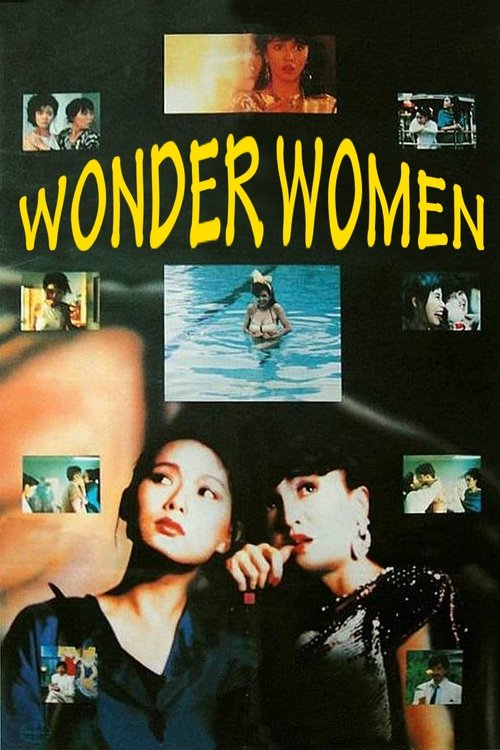
Wonder Women
Plot
This is an outrageous comedy about seven days in the life of two girls Leung and Ling, who want to skyrocket to the top by entering a beauty pageant. Both girls are ballyhooed as the hottest contestants, but at the end neither can make it to the top 5! What's more, Ling is dumped by her boyfriend, and gets fired at the same time. Being afraid of going home to get along with her father. Leung gives her a hand, inviting Ling to stay with her in her roof-top bungalow. Then they begin their days of similar conscious degradation, which force them to become best friends. But their friendship becomes short-lived when they run into a handsome and well-built young man Wong. They start to vie for his attention and his sex. However, before the climax of their war comes, they find out that he's a dawdler. Shattered by the fact, the two girls eventually come to team with one another.
Get the Weekly Woke Watchlist
New and trending movies scored for woke bias, preachy messaging, and forced political themes — before you waste your evening.
No spam. One useful email per week.
Overall Series Review
Categorical Breakdown
The plot focuses entirely on the personal ambitions and emotional struggles of the two protagonists, Leung and Ling, rather than race or immutable characteristics. Casting is naturally authentic to the Hong Kong setting, promoting a sense of universal meritocracy.
The film satirizes local Hong Kong society's expectations of women at the time, such as the pressure to find a wealthy man or attain fame, which is a critique of specific cultural norms. It is not framed as a fundamental, corrupt, or racist condemnation of Western civilization or ancestors.
The narrative explicitly resolves with the men in the film being portrayed as disappointing and flawed (the boyfriend dumps Ling, Wong is a 'dawdler'). The two female leads reject romantic reliance, choosing to 'team with one another,' expressing a theme that career/self-reliance is superior to reliance on a man, which aligns with the 'Girl Boss' trope's core philosophy.
The plot centers on a traditional love triangle and subsequent platonic female friendship. There is no presence of alternative sexual ideologies, deconstruction of the nuclear family, or lecturing on gender theory.
The film is a secular comedy focused on material aspirations (beauty pageant, jobs, dating, money) with no mention of religion or spirituality, nor is there any engagement with moral relativism.
Get the Weekly Woke Watchlist
New and trending movies scored for woke bias, preachy messaging, and forced political themes — before you waste your evening.
No spam. One useful email per week.