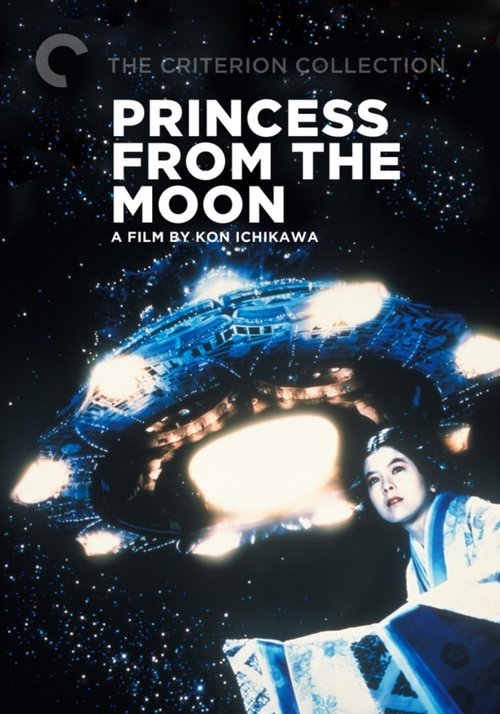
Princess from the Moon
Plot
Two poor, married farmers have recently lost their only child; after a freak visitation, they pry open an alien cocoon to greet their new daughter.
Get the Weekly Woke Watchlist
New and trending movies scored for woke bias, preachy messaging, and forced political themes — before you waste your evening.
No spam. One useful email per week.
Overall Series Review
Categorical Breakdown
The movie is a Japanese production based on a Japanese folk tale set in Heian-era Japan with an entirely Japanese cast, precluding any Western-centric critique of whiteness or forced diversity. The central conflict is a critique of the corrupt, high-ranking aristocratic class versus the humble commoners, focusing on a class hierarchy rather than intersectional characteristics. Characters are judged by the sincerity of their affection and attempts to fulfill tasks, which aligns with universal merit.
The film’s setting is ancient Japan, and its criticism is specifically directed at the 'brutal ruling classes and wily, opportunistic aristocrats' of that society. This is a focused critique of an elite power structure, not an attack on the common culture or ancestors of the Japanese people. The alien culture of the Moon is a spiritual/cosmic rival, not a morally superior contrast used to lecture against the Japanese home culture as a whole.
Kaguya-hime is a powerful female figure who successfully rejects all male suitors, including the Emperor, by exposing their dishonesty and greed. The rejected men are generally portrayed negatively, which reflects the 'Girl Boss' trope by showcasing a woman who is superior to all men who seek to possess her. However, the deep, sacrificial love of the adoptive mother and father is celebrated, and the anti-natalism is a consequence of the character’s celestial destiny, not a philosophical rejection of motherhood or family.
The narrative is centered on a traditional family unit (a married, childless couple) who adopt a baby, celebrating the parent-child bond. The main romantic conflict involves Kaguya's rejection of multiple male suitors and the Emperor. There are no elements of alternative sexualities, deconstruction of the nuclear family, or gender ideology present in the storyline.
One of the specific aristocratic figures criticized for his brutality is a high priest, which depicts a corrupt religious *authority* as evil. However, the adoptive mother initially cries out to 'heaven' which is answered by Kaguya’s arrival. The narrative’s conclusion involves a transcendent, cosmic law (the Moon's claim) replacing the Earth's human systems. This is more of a spiritual/cosmic fantasy framework than an anti-theistic moral lecture against faith itself.
Get the Weekly Woke Watchlist
New and trending movies scored for woke bias, preachy messaging, and forced political themes — before you waste your evening.
No spam. One useful email per week.