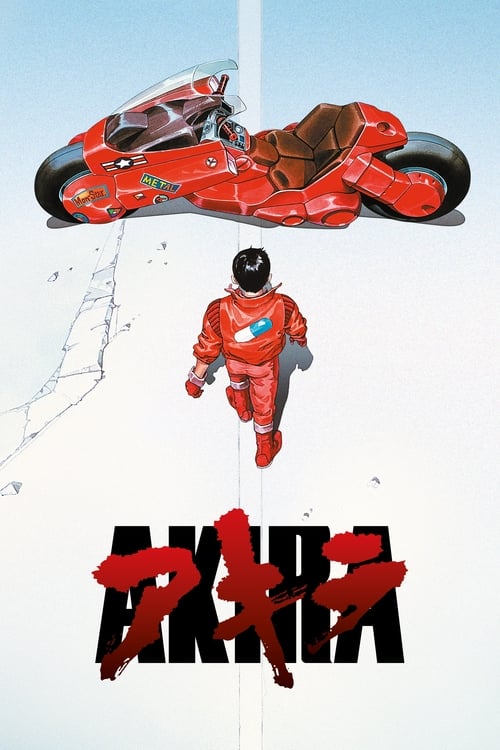
Akira
Plot
A secret military project endangers Neo-Tokyo when it turns a biker gang member into a rampaging psychic psychopath that only two teenagers and a group of psychics can stop.
Get the Weekly Woke Watchlist
New and trending movies scored for woke bias, preachy messaging, and forced political themes — before you waste your evening.
No spam. One useful email per week.
Overall Series Review
Categorical Breakdown
The movie is an entirely Japanese production with Japanese characters, and the conflicts are based on class, power, and generational alienation. There is no focus on Western-style intersectional hierarchy, vilification of 'whiteness,' or forced insertion of diversity. Characters are judged by their actions and the power they wield, adhering to a universal meritocracy of ability.
The entire society of Neo-Tokyo is presented as morally and structurally rotten, controlled by corrupt politicians and a desperate, authoritarian military. The city is literally destroyed twice, symbolizing the catastrophic failure and self-hatred of the existing national and governmental institutions. The institutions are viewed as inherently hostile and dangerously incompetent, creating a clear indictment of the 'home culture's' leadership.
The core conflict is between male characters (Kaneda, Tetsuo, and the Colonel). The female characters, such as the resistance fighter Kei and the powerful esper Kiyoko, are competent and active participants in the plot. However, they are not portrayed as instantly perfect 'Mary Sues' and do not drive the main philosophical conflict. The film lacks any messaging about anti-natalism or career as the only fulfillment; thus, the score remains low, acknowledging strong female characters without a modern feminist lecturing theme.
The narrative makes no attempt to center alternative sexualities, deconstruct the nuclear family as an ideological goal, or lecture on gender identity. Any disconnection from family structures is a result of the dystopian, orphaned reality of the characters rather than an ideological critique of the traditional family unit as an 'oppressive' structure. Sexuality is private and not a theme.
Traditional religion, specifically Christianity, is not a central focus or target of vilification. However, the vacuum of spiritual meaning is a key theme, as people begin to worship Tetsuo and the psychic power Akira as a new, unstable god in response to the chaos. Morality is largely presented as subjective and defined by power dynamics, indicating a spiritual vacuum and the failure of purely scientific or secular government to provide a moral center.
Get the Weekly Woke Watchlist
New and trending movies scored for woke bias, preachy messaging, and forced political themes — before you waste your evening.
No spam. One useful email per week.