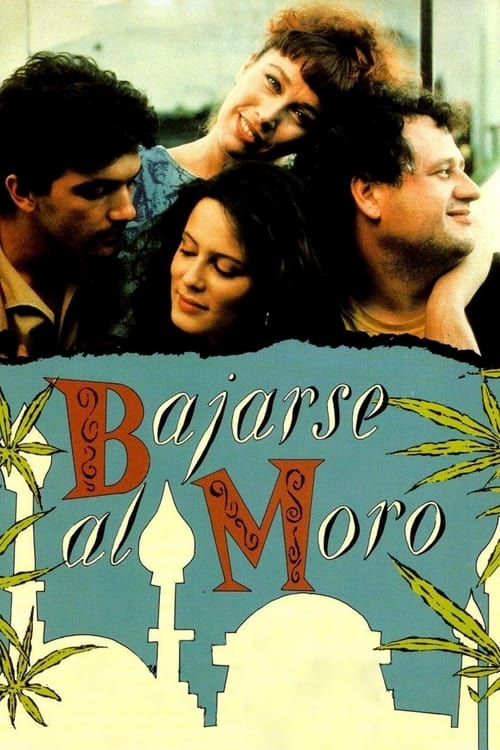
Going Down in Morocco
Plot
A girl who lives with her dealer cousin and her policeman boyfriend who is a policeman regularly transports drugs from Morocco for her cousin. As all of them smoke grass from time to time there is need for more. Deciding to take a friend of hers who has just left home down to Morocco for a transport she gets problems because it is the first time for her friend and this makes it difficult. But as all are very open-minded there is no problem they would not try to solve.
Get the Weekly Woke Watchlist
New and trending movies scored for woke bias, preachy messaging, and forced political themes — before you waste your evening.
No spam. One useful email per week.
Overall Series Review
Categorical Breakdown
The film’s central conflict is rooted in the characters’ illegal lifestyle and personal dynamics, not in an intersectional lens of power or privilege. The characters are all Spanish and are judged by their actions as drug smugglers and cohabitants. The narrative focuses on character merit (or lack thereof) in criminal schemes.
The film embraces a chaotic, bohemian lifestyle which is antithetical to traditional social order, but it does so with 'compassionate good humor' toward the new democratic urban life of Madrid. The critique is leveled at middle-class norms and the law, which is represented by a character who is himself complicit in the crime. It is more of an anti-establishment, counter-cultural sentiment than a fundamental hatred of Spanish-Western civilization.
The female lead, Chusa, is the primary operator and decision-maker in the criminal enterprise, which is a strong example of the 'Girl Boss' trope subverting the moral and legal order. The plot is propelled by her scheme and her use of another woman. The male characters, particularly Alberto the policeman, are depicted as bumbling and complicit partners in the crime, suggesting a degree of emasculation within the relationship dynamic.
The core of the romantic and sexual dynamics is explicitly a traditional male-female pairing (Chusa and Alberto), which is complicated by the attempt to involve a new female character (Elena) in a highly specific, heterosexual-normative problem (her virginity). The structure is normative, even if the characters' moral lives are unconventional, and there is no focus on gender ideology or alternative sexualities.
Religion is not a central theme, but the characters' criminal and morally relativistic lifestyle stands in direct opposition to traditional morality. A plot point mentions the possibility of hiding drugs in a basilica. This shows a profane disregard for the sacred, though the film's focus is on the farce of crime rather than a direct philosophical assault on faith.
Get the Weekly Woke Watchlist
New and trending movies scored for woke bias, preachy messaging, and forced political themes — before you waste your evening.
No spam. One useful email per week.