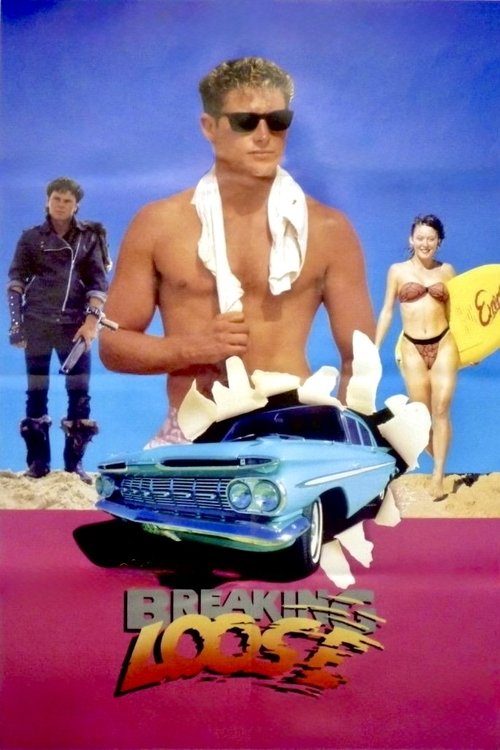
Breaking Loose
Plot
A young man leaves home in search of his fathers backgound in a small country town and gets mixed up with all sorts of weird and wild characters.
Get the Weekly Woke Watchlist
New and trending movies scored for woke bias, preachy messaging, and forced political themes — before you waste your evening.
No spam. One useful email per week.
Overall Series Review
Categorical Breakdown
The narrative does not center on an intersectional hierarchy or racial politics. The protagonist is a white male, Ross, who is neither depicted as inherently evil nor incompetent. A key supporting character, Davie, is Aboriginal and is presented simply as the 'mate and business partner' of Robbie, treating their bond as colorblind and based on merit/friendship. The central conflict is criminal, not racial.
The film focuses its critique on specific failures within the local society, such as corrupt local police who plant evidence and a small-town plagued by a criminal bikie gang and a dysfunctional marriage between the hosts. This constitutes a critique of localized immorality and institutions, not a broad demonization of Western civilization or Western ancestors as fundamentally corrupt.
Female characters are not presented as 'Girl Boss' or 'Mary Sue' figures. The most prominent adult woman, Helen, is portrayed as unhappy, lonely, and making 'menopausal advances' toward the younger male lead, Ross. The film depicts a dysfunctional marriage with a drunk, abusive husband (Neville). This is a narrative about personal failure and relationship drama, not a systematic attack on masculinity or an anti-natalist message.
There is no evidence of queer theory or alternative sexualities being central to the narrative. The sexual dynamics that exist, such as the troubled marriage and the suggested adultery, are strictly within the traditional male-female pairing. The film adheres to a normative structure without political lecturing on sexual or gender identity.
The core plot is a crime/action-drama about a personal quest and evading a criminal gang. There are no indications of hostility toward traditional religion, specifically Christianity, and moral themes are tied to crime and justice (corrupt police vs. good guys) rather than a debate on moral relativism. Any 'faith echoes' mentioned in reviews refer to classic themes of alienated youth, not religious critique.
Get the Weekly Woke Watchlist
New and trending movies scored for woke bias, preachy messaging, and forced political themes — before you waste your evening.
No spam. One useful email per week.