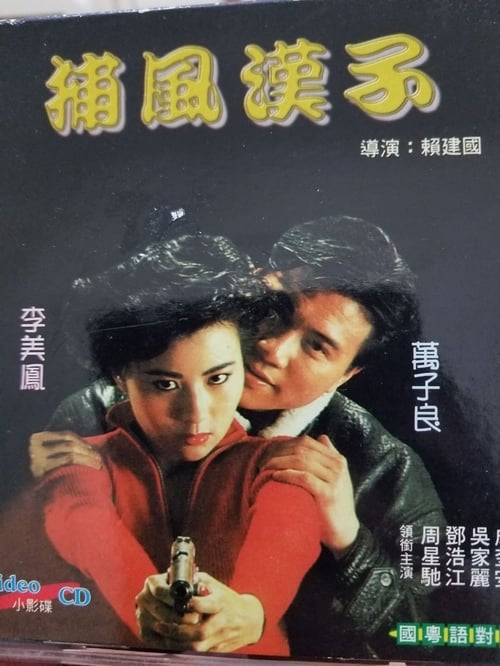
He Who Chases After the Wind
Plot
Basically a love story with a prerequisite sub-plot about a crazed killer trying to avenge his brother.
Get the Weekly Woke Watchlist
New and trending movies scored for woke bias, preachy messaging, and forced political themes — before you waste your evening.
No spam. One useful email per week.
Overall Series Review
Categorical Breakdown
The film is a 1988 Hong Kong production with an entirely local, non-Western cast. The conflicts and character dynamics revolve around crime, revenge, personal obsession, and professional ethics. Character value is determined by individual actions (policeman’s stalking, killer’s vengeance, doctor’s profession), not by race or an intersectional hierarchy. There is no critique or vilification of 'whiteness,' forced diversity, or historical 'race-swapping.'
The narrative is a genre thriller focusing on criminal and psychological drama within a local Hong Kong setting. The story does not contain any hostility toward Chinese or Western civilization, nor does it attempt to deconstruct the nation's heritage or institutions. The plot is concerned with individual moral failures and a desire for revenge, not civilizational self-hatred or the 'Noble Savage' trope.
The female lead is a professional psychologist, a position of merit and career fulfillment. However, the plot frames her primarily as an object of the male protagonist’s obsessive affection and a victim in the crime and romance plot. A female police colleague is shown to be professionally capable but is driven by jealousy and unrequited love to commit an unethical act (handing over a diary). Men and women hold distinct roles but the narrative’s focus on the female leads as romantic targets or jealous rivals aligns with traditional melodrama tropes rather than modern 'Girl Boss' perfection or anti-natalism.
The core relationships driving the plot—the policeman’s infatuation with the psychologist and the police colleague’s unrequited love for the policeman—are strictly heterosexual. The narrative's focus on obsession, revenge, and crime contains no element of queer theory, alternative sexualities being centered, or commentary on gender ideology or the nuclear family structure.
The film is a secular crime and romance story. Character motivations are entirely humanistic and secular, driven by revenge, love, and professional duty. There is no religious element, no criticism of faith, and no representation of Christian characters as bigots or villains. The moral framework is based on legal and personal responsibility rather than a lecture on moral relativism.
Get the Weekly Woke Watchlist
New and trending movies scored for woke bias, preachy messaging, and forced political themes — before you waste your evening.
No spam. One useful email per week.