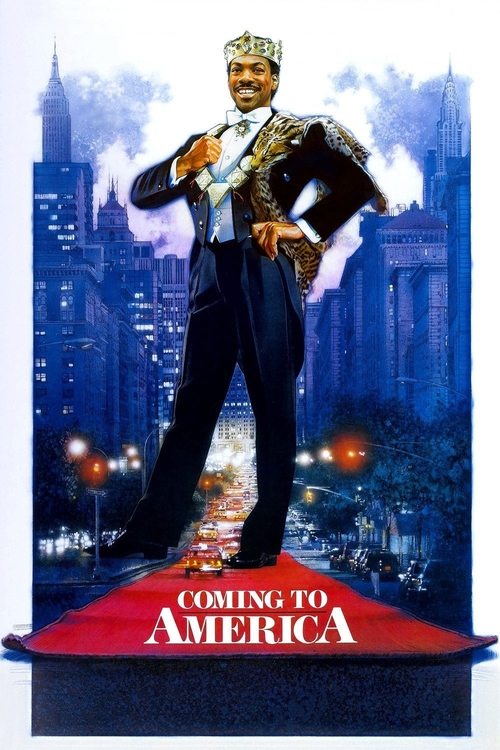
Coming to America
Plot
An African prince decides it’s time for him to find a princess... and his mission leads him and his most loyal friend to Queens, New York. In disguise as an impoverished immigrant, the pampered prince quickly finds himself a new job, new friends, new digs, new enemies and lots of trouble.
Get the Weekly Woke Watchlist
New and trending movies scored for woke bias, preachy messaging, and forced political themes — before you waste your evening.
No spam. One useful email per week.
Overall Series Review
Categorical Breakdown
The plot focuses on the main character seeking universal meritocracy, wanting to be judged by his soul rather than his wealth or status. The primary antagonist is a wealthy, status-obsessed black male, and the other antagonist is a traditionalist African King. The story avoids lecturing on systemic oppression or vilifying whiteness.
The film’s central conflict is the prince escaping his home civilization, Zamunda, whose traditions are framed as fundamentally corrupt, robotic, and sexist. The prince chooses to embrace the American environment, which is portrayed as a place of freedom, possibility, and self-determination, which his own kingdom lacks.
The inciting incident is the prince's complete rejection of an arranged bride who is trained to be perfectly submissive, voiceless, and mindless. He seeks a woman with intelligence and a strong will, which is a decisive narrative critique of male-dominated, objectifying patriarchy. The love interest is level-headed and independent, contrasting with a secondary male character who represents toxic masculinity.
The story is entirely centered on the traditional male-female quest for marriage. Alternative sexualities, gender ideology, or deconstruction of the nuclear family are not present as narrative elements or themes. The structure is completely normative.
Religion is satirized only through a minor, comic caricature of a hypocritical preacher. The main narrative thrust is about finding objective goods like honesty, integrity, and true love, which operates within a transcendent moral framework rather than one of subjective relativism.
Get the Weekly Woke Watchlist
New and trending movies scored for woke bias, preachy messaging, and forced political themes — before you waste your evening.
No spam. One useful email per week.