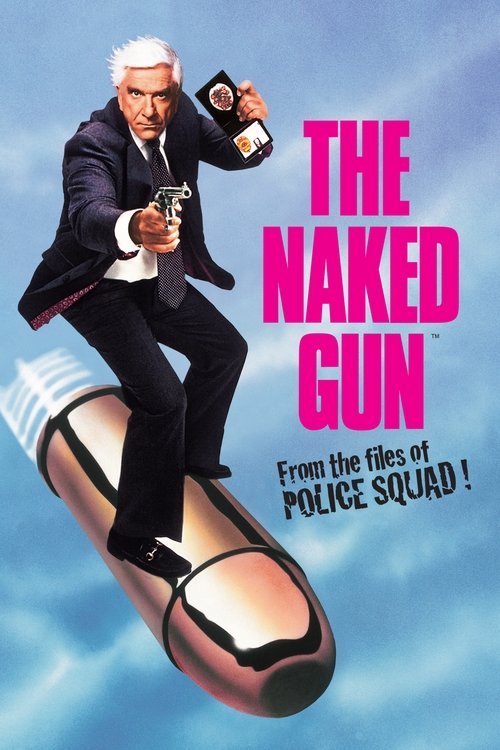
The Naked Gun: From the Files of Police Squad!
Plot
When the bumbling Lieutenant Frank Drebin investigates events following the shooting of his partner, he stumbles upon an attempt to assassinate Queen Elizabeth II.
Get the Weekly Woke Watchlist
New and trending movies scored for woke bias, preachy messaging, and forced political themes — before you waste your evening.
No spam. One useful email per week.
Overall Series Review
Categorical Breakdown
Characters are judged solely by their competency (or total lack thereof) and function within the parody genre. The narrative does not focus on race or immutable characteristics to define the hero or villain. The villain is a wealthy businessman, and the hero is a bumbling white cop, who, despite his incompetence, is the film’s moral center. There is no lecturing on privilege or forced insertion of diversity; casting simply fills the roles necessary for the plot’s parodic structure.
The plot centers on saving Queen Elizabeth II, a primary symbol of a Western institution and heritage. The film's heroes are actively trying to protect an institution of American culture (a baseball game) and a European monarch. The opening sequence features the main hero defeating several world leaders characterized as 'America's greatest enemies,' which, while satire, is the opposite of hostility toward one's own civilization. Any mockery is directed at the incompetence of the police or the absurdity of political summits, not a fundamental attack on Western values.
The main female character, Jane Spencer, is introduced as the traditional femme fatale archetype from noir, though she is ultimately a damsel-in-distress who falls for the hero. She is not a 'Girl Boss' or 'Mary Sue.' The movie's central male-female relationship concludes with a public, enthusiastic marriage proposal and acceptance, which is a definitive celebration of a traditional family unit. The men are incompetent, but that is the film’s universal joke, not a gender-specific vilification.
The core romance is a traditional male-female pairing that culminates in a proposal and is the emotional anchor of the plot. The film's focus is on heterosexual relationships and the nuclear family as the standard. The film does not center on alternative sexualities, nor does it include any lecture or focus on gender ideology. Any moments that could be construed as sexual commentary are fleeting, boundary-pushing sight gags, not narrative themes.
Religion, specifically Christianity, is entirely absent from the film’s narrative and themes. The movie is concerned with a crime plot and slapstick comedy, not a spiritual vacuum or moral debate. The protagonist is defined by a simple, objective moral code of saving the Queen and stopping the criminal, which implicitly relies on a standard of objective truth and moral law.
Get the Weekly Woke Watchlist
New and trending movies scored for woke bias, preachy messaging, and forced political themes — before you waste your evening.
No spam. One useful email per week.